

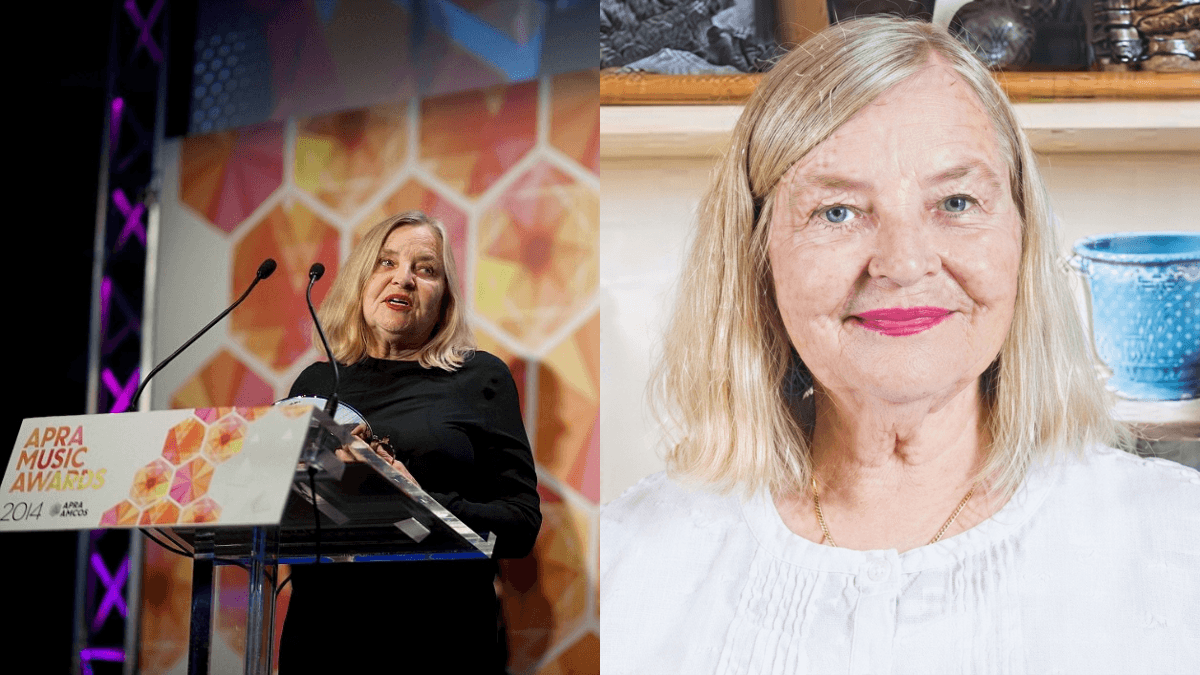
Looking at Loene Furler’s early path, I find her time in the early 1960s especially interesting because she studied at the South Australian School of Art in Adelaide, where she experimented with different media while building a strong technique in drawing and painting. Born in Melbourne in 1944 and raised to be curious and crafty, she carried that creative attitude from her student years into teaching, performing, and raising a kid, while she worked across forms for decades, a tendency she inherited from those years. Her creative life also moved naturally toward the film set, with The Bird in 1968 providing an early proof that the stage and studio could remain close companions throughout her career.
Loene Furler’s Life in Art and Music
From my perspective, Loene Furler’s creative journey is best understood through the steady painting practice that runs like a continuous bassline through her work. Her muscular drawings and mixed media paintings show an artist who kept pushing herself, while her solo exhibition in 2002 and its book brought together student-era and later works. Alongside her studio practice,
She taught painting at the University of South Australia, balancing instructing by day with gigging at night, a tough balance that carried an accumulated toll, yet she kept the thread of her creative life. In 2023, she supplied intimate photos of Adelaide’s music scene to the Adelaide Festival Centre for the Turn Up Your Radio program, giving audiences another view of how her eye remained as keen as her ear.
| Quick Bio | Details |
|---|---|
| Full Name | Loene Furler |
| Born | 1944 |
| Birthplace | Melbourne, Australia |
| Raised In | Adelaide, South Australia |
| Profession | Artist, Painter, Teacher, Musician |
| Education | South Australian School of Art |
| Main Art Forms | Drawing, Painting, Mixed Media |
| Musical Role | Bass Player, Performer |
| Daughter | Sia Kate Isobelle Furler (Sia) |
| Former Partner | Phil Colson (Philby) |
| Known For | Visual art, Adelaide music scene, all-women bands |
| Teaching | University of South Australia |
| Notable Exhibition | Solo exhibition, 2002 |
| Public Work | Art exhibitions, music performances, community projects |
Bands, Stages, and Songs
Loene Furler built her musical path in her own time, moving between painting, music, and performance with a natural creative energy. In the early 1980s, she founded Ruby Red and the Chevrolets with her friend Sheree Goldsworthy. At around 30 to 36, she created many of the tunes while playing bass in this uncommon, all-women, instrumental trio. She studied bass from her partner, blues guitarist Phil Colson, and swiftly connected her painting dynamism with a rhythmic pulse. From my view, that link between visual energy and sound helps explain why her songwriting, bass player role, and wider artistic life could exist together so closely.
The Silky Mitts added another side to her lively stage demeanor and live music work. She occasionally performed with a paper bag over her head, a funny way to avoid the male gaze that was common in music venues. Her other efforts included Subtonix, also known as Subtonics, The Soda Jerx, and Girls at Play. The term Girls at Play referenced Men at Work, reflecting her connection with Colin Hay. These band projects show how her instrumental music, stage presence, and musician identity developed through different forms of performance.
She also sang backing vocals with the Mount Lofty Rangers and performed in intimate settings and at the Festival Centre in Adelaide. Behind the degree, her practice session studio turned into additionally a own family nest, so own family, rehearsal, and creative paintings had to share the identical space. Later-night sets supposedly negotiated early babysitter availability, at the same time as years of gigging sooner or later led her to step back after a decade of rigorous gigging because of tiredness. Rather than withdraw, she chose to recalibrate, much like a musician who lessens dynamics so a melody can breathe, leaving her rhythm, music, and artistic life connected even when the pace changed.
Family Ties
In my view, the story of Loene Furler becomes clearer when looking at the people and music around her. In Adelaide, the creative network helped shape her own family life. In the early Nineteen Seventies, she quickly married Vytas Serelis, a painter, musician, and photographer from the equal circles. By the mid-Seventies, she changed into Phil Colson, also referred to as Philby, a blues guitarist who taught her bass. Their home lifestyles targeted on units, rehearsals, and close comrades, growing a musical placing for their daughter, Sia Kate Isobelle Furler,
who turned into born on December 18, 1975. The home was filled with harmony and chord changes, while Sia listened to practices and quietly added harmonies. As someone looking at this family history, I find these small details useful because they show how music was part of daily life rather than simply a career. By the mid-1980s, Sia sang while Furler played bass at Club Limbo. When Sia was 10, Loene and Phil divorced in 1985–1986,
leaving her to balance teaching and perform work as a single mother. Over time, their mother-daughter relationship remained important. In the 1990s, Furler remembered a Festival Centre Plaza concert where Sia’s vocals quieted the crowd, and she later praised Sia’s success at the 2014 ARIA awards. Public information records no other spouses, partners, children, or grandkids for Furler beyond these details.
Recent Mentions and Ongoing Work
In years Loene Furler has stayed involved with Adelaide’s arts scene even though she does not often show up in national media. She was part of the Festival Centre’s anniversary events, in 2023 posting band pictures and talking about being a parent and music.A 2025 cultural essay about musician mothers also featured a mid-1980s photo showing Furler with a bass and young Sia at the microphone,
alongside the image of mothers carrying amps while preparing lunchboxes. Her involvement continued through a multigenerational debate on ambition, resilience, and community on a creative women’s podcast during 2025–2026. Her personal social media accounts remain unverified, while exhibitions, interviews, and community projects continue to shape her public profile more than social media.
Conclusion
Looking at Furler’s story, her impact is not measured only by Platinum records or major prizes. In Adelaide, she showed how an artist, teacher, and musician could begin a musical path at 30, build all-women bands, and still make set times for a child at home. Her story reflects patience, fun, courage, craft, and an understanding that art is a lengthy game, while music is a team sport. The photos, memories of Paper bags, and the energy people remember all add a human side to her work and the musical life she helped create.
FAQS
Who is Loene Furler?
Loene Furler is an artist, teacher and musician connected to Adelaide’s creative and music scene.
When did Loene Furler start playing music?
Furler started playing music as an adult and was a musician by the age of 30.
Who is Loene Furler’s daughter?
Her daughter is Sia Kate Isobelle Furler, known professionally as Sia.
What instrument did Loene Furler play?
She played bass and was part of different music groups, including all-women bands.
Was Loene Furler involved in Adelaide’s music scene?
Yes. She was part of Adelaide’s arts and music community. Played at local venues.
What is Loene Furler known for?
She is known for her work, as an artist, teacher, musician and member of Adelaide’s creative community.
