

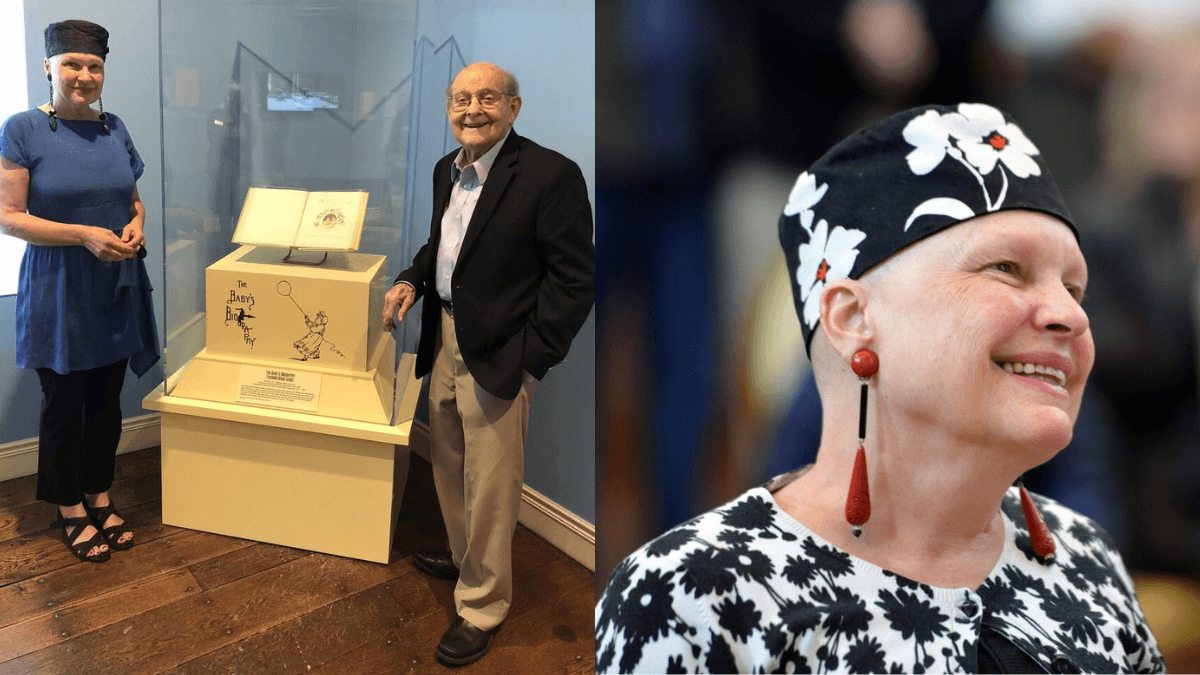
Leagrey Dimond’s lifestyles reflect a close connection among family, memory, and inheritance, even as also showing a hobby in books, philanthropy, and the literary international. Her tale may be viewed as a warm, regular lamp in a quiet studying room, supplying a mild way to recognize larger family records fashioned via cultural legacy and own family have an effect on. Looking at her biography, I find that her lifestyles may be explored from facets: one turns inward closer to private records,
own family relationships, family memories, heritage, and personal identification, whilst the opposite appears outward closer to community support, charitable giving, and legacy renovation. Her connection to Dr. Seuss also places her within a recognizable cultural history, wherein privateness and duty can rely as much as a public name. Rather than treating her public profile as a spectacle,
it’s far more beneficial to not forget the non-public values at the back of her quiet lifestyles, careful public voice, and practical alternatives. A bookstore, a donation, or a considerate public remark can constitute distinctive approaches of contributing without seeking regular public attention. These details help give an explanation for the edges of her family legacy, where a measured public presence exists alongside a blanketed personal lifestyles and an occasional deliberate retreat from attention.
Leagrey Dimond’s Childhood, Parents, and Family Background
The Dimond family background helps explain the family connections that shaped Leagrey Dimond and her sister, Lark Grey Dimond-Cates. Their father, Edmunds Grey Dimond, changed right into a medical health practitioner, even as their mom, Audrey Geisel, modified right into a nurse and mother earlier than turning into extensively referred to as the widow of Theodor Geisel, the famend writer higher referred to as Dr. Seuss. Audrey later became the founder of Dr. Seuss Enterprises, assisting, protecting and manipulating a chief literary legacy. Her marriage to Theodor in 1968,
while Leagrey became young, introduced a famous stepfather into an already mounted family. This created a complicated household in which children, household members, and family relationships became part of a wider family history. From my perspective, understanding this family background, parental influence, and parental background provides a useful starting point for exploring Leagrey’s personal history, family identity, and life story. The family’s private history remained an important part of its story, even as its connection to the literary world attracted public recognition and public visibility.
Leagrey and Lark grew up within a family formed by using imagination, books, and art, despite the fact that their specific careers sooner or later gave them separate paths. Lark became an artist and sculptor, connecting her work to Dr. Seuss through public art, museums, museum exhibitions, and different artistic contributions. Their shared family included household memories, family memories, family traditions, and a household environment influenced by creative imagination. Behind this renowned literary empire was a kind of secret scaffolding made up of personal relationships, responsibilities,
and the family influence that supported its development. Their grandparents, Norman Alfred Stone and Ruth Benson, also form part of the older familial branch, adding depth to the family’s ancestry, older names, migrations, and work. These historical roots, together with maternal history, paternal history, and generational history, help explain the family’s structure, connections, and generational connections. The broader cultural heritage, cultural influence, literary heritage, artistic heritage,
and connection to children’s literature all contribute to the family’s public legacy and inherited history. At the same time, private life, family responsibilities, family development, family lineage, and family experiences remain important when considering Leagrey’s place in this family portrait, its family narrative, and the ongoing work of legacy preservation within its historical context.
| Quick Bio | Details |
|---|---|
| Full Name | Leagrey Dimond |
| Known For | Connection to the Geisel family, books, philanthropy, and family legacy |
| Mother | Audrey Geisel |
| Father | Edmunds Grey Dimond |
| Sister | Lark Grey Dimond-Cates |
| Stepfather | Theodor Geisel, known as Dr. Seuss |
| Family Connection | Geisel and Dimond families |
| Career Association | Bookselling and independent bookstore work |
| Bookstore | Thidwick Books |
| Location | San Francisco, California |
| Interests | Books, reading, philanthropy, cultural and family history |
| Family Legacy | Connected to the literary legacy of Dr. Seuss |
| Public Profile | Known primarily through her family connections, bookselling, and philanthropic activities |
A Bookstore Life and the Discipline of Independent Work
The bookshop existence of Leagrey Dimond became carefully tied to books, Thidwick Books, and the San Francisco literary scene. Running a small enterprise for decades, along with time on Clement Street, required a regular temperament, judgment, endurance, and interest in normal details. A bookseller has to exercise taking note of customers, expertise patterns, remembering ordinary customers, and knowing which name belongs on each shelf. I see this kind of every day work as a quiet daily act that creates a literary environment through cabinets, paper, and private contact.
Thidwick Books became a community fixture within unbiased retail, growing its very own rhythm and slow pulse. The proprietor labored at the back of the counter, often amongst cramped aisles, in which the odor of paper and conversations about studying created a strong private connection. Each title on the shelf could sense like a small promise, even as the store itself became part of the local people, literary subculture, studying culture, and e-book lifestyle. This was now not clearly approximately business scale. It became a narrower, greater long lasting form of retail built around patron relationships, a shared place, and a lasting experience of neighborhood identity.
The career also suggests resilience in the face of prison pressures, structural pressures, and changing business pressures. The original vicinity subsequently closed, but the shop later reopened some place earlier than it in the end closed once more after a longer term. That pattern displays the experience of many unbiased organizations, specially small bookstores, in which staying power, version, and resilience can be necessary genuinely to remain open. The authentic save and new region became a part of the store’s commercial enterprise records
and store records, even as its closure and reopening formed a part of its wider story. Even after disappearance, an independent bookstall can stay in civic reminiscence, network reminiscence, and neighborhood records via the people who visited it. In that experience, Leagrey’s ownership represented more than normal independent commercial enterprise or small business work. It linked bookselling, reading behavior, civic lifestyles, and nearby community via years of regular attempt, giving the store a sense of durability and legacy with no need to chase more scale.
Audrey Geisel, Dr. Seuss, and the Burden of Legacy
Leagrey Dimond grew up near a family call that carried a strong public shadow, in large part because Audrey Geisel helped guard the Dr. Seuss legacy after the existence of Theodor Geisel. His paintings have become one of the most recognizable manufacturers in American kids’ literature, growing a powerful cultural engine across the original writer and his author’s lifestyles. For Leagrey, this was not best a reminder of literary history or a famous literary brand.
Dr. Seuss turned into additionally a stepfather, a family member, and an individual in the home and circle of relatives life. Her public remarks about him therefore sit among public identification and personal enjoyment, showing how family records can exist alongside wider public interest, recognition, and cultural impact. The story includes early imagery, a complicated communication,
and the need for balance between affection, history, and critique. Rather than counting on simple praise or easy condemnation, a fuller frame lets in area for nuance, historic context, and a more thoughtful personal angle. In my experience of reviewing a circle of relatives’ histories linked to main cultural figures, this type of approach often offers a clearer photo because it continues the human side seen without casting off the hard parts of the beyond.
That perspective becomes especially important when considering family memory, gratitude, tension, silence, and selective remembrance. Leagrey’s connection to the literary world placed her within a wider cultural legacy, but her personal memory, family story, and family connection could still hold details that were different from the public image of a famous literary figure. This creates a form of family shadow in which public perception, literary reputation, and private memory can exist at the same time.
Her story also touches American culture, children’s books, childhood literature, literary culture, literary heritage, and artistic legacy, while raising questions about family values, family attachment, emotional history, and family dynamics. The wider family legacy includes cultural history, historical legacy, shared history, generational memory, and legacy preservation, while private life and public life remain closely connected.
Seen this way, personal identity, public voice, public discourse, and cultural discussion end up parts of a bigger family narrative. The potential to preserve a balanced view, apprehend complexity, and maintain a considerate perspective can itself require courage and responsibility, especially when the character on the center is both a public discern and a part of a stepfamily with its own family reminiscences and private connection to the past.
Philanthropy, Giving, and a Private Sense of Responsibility
Leagrey Dimond’s philanthropic circles, philanthropy, and giving appear practical instead of theatrical, with attention directed towards charities, network groups, museums, and establishments related with their own family history and cultural records. Her discipline, generosity, and ordinary donation habits display how she supported causes through private assets as opposed to counting on grand gestures or headlines. This made her public profile feel grounded, even as her philanthropic paintings, charitable giving, network assist, and social contribution reflected accountable giving and sensible generosity.
Her position as a family member additionally connected those efforts with family duty, own family legacy, literary legacy, cultural upkeep, ancient preservation, and legacy upkeep. From a piece of writing attitude, this kind of giving is regularly less difficult to apprehend thru repeated habits than via remote public moments, due to the fact charitable behavior, philanthropic subject, network involvement, and institutional help can quietly fortify community causes, cultural establishments, and network institutions.
The connection with the Springfield Museums gives that approach a clear example. Family objects, memorabilia, personal gadgets, family memorabilia, own family artifacts, cultural artifacts, historical objects, and different personal belongings related to Dr. Seuss, Geisel, and the Geisel circle of relatives had been donated, displayed, and positioned into museum collections and museum display, developing public memory, historical memory, and collective reminiscence within a shared space.
The method of transferring these materials into public care gave her stewardship, cultural stewardship, and museum preservation much wider which means through public historical past, public admission to, public exhibition, public storytelling, and institutional maintenance. It additionally brought circle of relatives connection, shared records, circle of relatives statistics maintenance, and cultural legacy into a larger tale, in which donated substances, items,
and devices may want to assist a continuing circle of relatives narrative and tale. In this placing, her contribution, resource, sources, causes, network, charities, museums, institutions, Springfield, Dr. Seuss, own family, reminiscence, maintenance, public contribution, social impact, public profile, and philanthropic interest turn out to be part of a much broader record of generosity, stewardship, and responsibility.
conclusion
The own family history of Leagrey Dimond turns into clearer when searching beyond the general public profile and public image. Her mother, Audrey Geisel, became a nurse and mother whose lifestyles related non-public being concerned with public impact, whilst her father, Edmunds Grey Dimond, helped form the household structure, circle of relatives lifestyles, and own family duties shared by Leagrey and Lark. Their everyday marriages, homes, parenting, caregiving,
and everyday duties display how even famous blended households can grow from an normal existence. Her sister, Lark Grey Dimond-Cates, created a innovative comparison thru her work as a sculptor and visible artist, even as Leagrey’s pursuits in studying and philanthropy gave the sisters different paths. I discover this type of sibling courting beneficial whilst analyzing a circle of relatives biography, because it shows how every member may be essential without sharing the identical career, personal identification, or public role.
The presence of her stepfather, Dr. Seuss, introduced wider family fame, public popularity, and cultural influence, turning creativeness into a country wide language and giving Leagrey a lasting cultural inheritance and literary legacy. Yet her tale also reaches similarly lower back to Norman Alfred Stone and Ruth Benson, her maternal grandparents, whose vicinity in the circle of relatives tree reflects ancestry, maternal lineage, own family lineage,
circle of relatives roots, and historic roots. Together, these relationships connect personal existence, public identification, private history, family history, generational history, circle of relatives connections, generational connections, cultural historical past, inherited legacy, artistic identity, innovative paintings, art, sculpture, visual arts, charitable giving, community have an impact on, and philanthropic identification.
The end result is a family narrative shaped via marriage, shared family, household surroundings, household obligations, own family structure, family relationships, parental influence, family contributors, grandparents, and public interest, while headlines, public headlines, and the Dr. Seuss legacy continue to be only one part of a far wider biographical records, country wide way of life, and cultural legacy.
FAQS
Who is Leagrey Dimond?
Leagrey Dimond is thought of for her connection to Audrey Geisel and Dr. Seuss. She has additionally been associated with books, philanthropy, and the renovation of family history.
Who are Leagrey Dimond’s mother and father?
Leagrey Dimond’s dad and mom are Audrey Geisel and Edmunds Grey Dimond. Her family history consists of both literary and inventive connections.
Who is Leagrey Dimond’s sister?
Her sister is Lark Grey Dimond-Cates, a sculptor and visual artist. The sisters observed special creative and expert paths.
How is Leagrey Dimond related to Dr. Seuss?
Dr. Seuss, whose real name became Theodor Geisel, became Leagrey Dimond’s stepfather. His literary career became a crucial part of her circle of relatives’ history.
What is Leagrey Dimond recognised for?
Leagrey Dimond is related to books, philanthropy, circle of relatives legacy, and cultural maintenance. Her connection to the Geisel family has also made her part of a wider literary history.
What is Leagrey Dimond’s connection to the Springfield Museums?
Family objects and memorabilia connected with Dr. Seuss and the Geisel circle of relatives were donated and displayed through the Springfield Museums, assisting to hold elements of the family’s cultural records.

1 Comment
Pingback: Ida Ferrier Biography, Stage Career, Marriage, and Later Life - Futurefanzine