

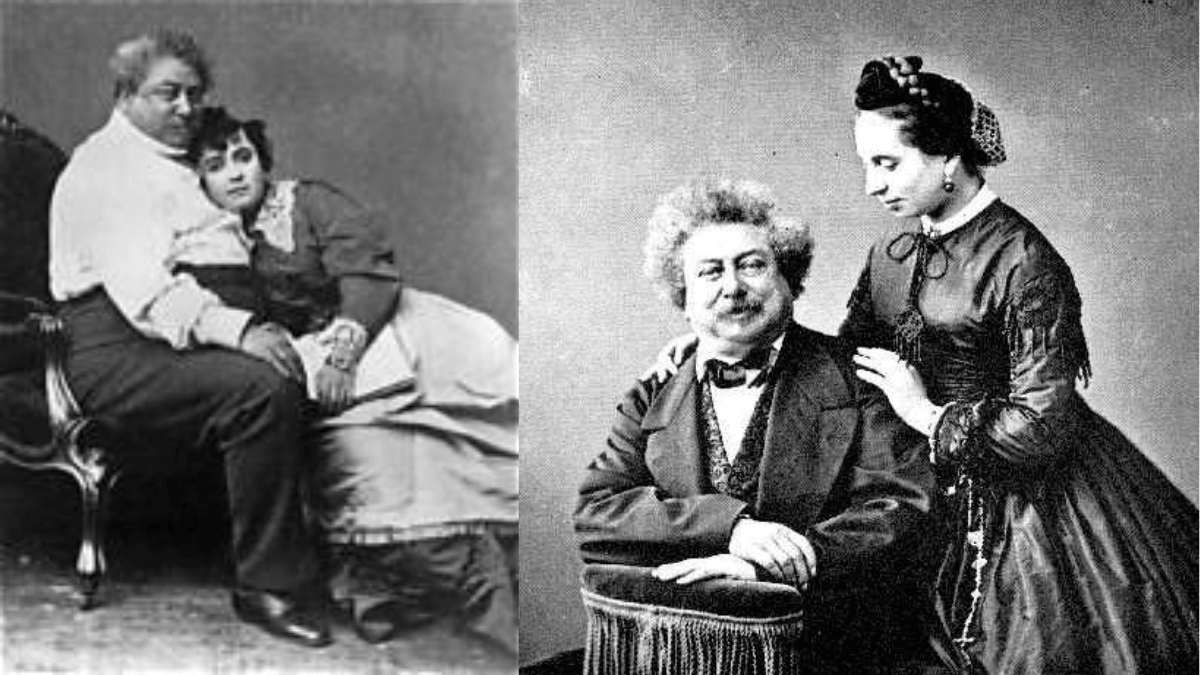
When looking at Ida Ferrier, it’s miles beneficial to begin with her identification as Marguerite-Joséphine, an actress whose career developed beneath the footlights of Paris at some point of the 1830s. Descriptions of her as a slender parent with a veiled yet velvet-like voice supply a sense of the presence she introduced to the stage, while her work in playhouses linked her with the developing international of Romantic drama. She became a familiar name inside the theatre, now not without a doubt through performing,
but through the needs of constructing a professional career in a period whilst art and survival have been closely linked. Her later marriage to Alexandre Dumas père made her widely remembered because the woman who has become his spouse, shaping her reputation and public lifestyles in methods that once in a while overshadowed her own work. From my evaluation of historic profiles, her story is more exciting while regarded through the regular pressures surrounding reputation, complaint, money, regulation, and love, in addition to her area within the wider literary international of nineteenth-century France.
Ida Ferrier’s Stage Career in Paris
Ida Ferrier constructed her stage profession through consistent paintings within the early 1830s and mid 1830s, when the stage boards may want to creak under the stairs of a lively performer. She became performing on the Opéra-Comique, Palais-Royal, and Porte Saint-Martin, earlier than joining the Comédie-Française in 1837, an critical organization acknowledged for its prestige, excessive expectancies, and near scrutiny. Her craft also linked her with Teresa, Angèle, and Caligula, performing via her future husband, even as works by using Victor Hugo pondered a period of French drama being reshaped via new works
and changing ideas about the level. The critics have divided approximately her peak and voice, with a few describing it as muffled, almost like sound protected by means of gauze, at the same time as others noticed the strength and presence she added without counting on loud trumpet tones. Théophile Gautier turned into amongst her supporters, spotting how well her instrument ought to serve a suitable position, while the combination of praise and mockery changed into common for actresses of the period.
Ida maintained her area in the repertoire, created roles, and secured contracts with homes that demanded pleasant rather than accepting mediocrity. Her appearing work receded after 1839, across the time of her wedding, as marriage, travel, and a new social role moved her away from the nightly grind of practice session and the exhilaration of applause. The lights steadily diminished on the acting Ida, although her name endured via dedicatory pages and behind the curtain histories.
| Category | Details |
|---|---|
| Full Name | Ida Ferrier |
| Birth Name | Marguerite-Joséphine |
| Born | 1811 |
| Birthplace | Nancy, France |
| Profession | Actress |
| Known For | Her French theatre career and marriage to Alexandre Dumas père |
| Spouse | Alexandre Dumas père |
| Marriage Year | 1840 |
| Dowry | 120,000 francs |
| Major Theatres | Opéra-Comique, Palais-Royal, Porte Saint-Martin, Comédie-Française |
| Later Years | Lived between Italy and France |
| Died | March 11, 1859 |
| Place of Death | Genoa, Italy |
| Legacy | Remembered through theatrical histories, portraits, biographies, and her connection to Alexandre Dumas |
Marriage to Alexandre Dumas
The early weeks of 1840 brought a major change to the private story of Ida Ferrier and Dumas, a relationship that had been unfolding for years before the marriage contract was signed on 1 February. Civil ceremonies and non secular ceremonies accompanied in early February, making the couple criminal spouses. Despite his many loves, Dumas married only Ida, and the contract indexed a dowry of one hundred twenty,000 francs, a great sum that later became a pivot in legal disputes.
The pair could be flammable, and they settled for a duration in Florence before becoming separated in a way that grew everlasting. Their household delivered artwork and domestic life collectively, with Marie-Alexandrine and journeying buddies, growing a setting that could sense like actors transferring between scenes. Dumas traveled, wrote, loved, and spent, while Ida navigated these converting currents and subsequently made a decision to transport right into a specific channel.
Separation, Italy, and Later Companions
In 1844, Ida and Dumas entered a formal separation that was recognized by law, although there was no divorce. The agreement dealt with their liabilities, required Dumas to provide a pension, and left Ida’s dowry protected. The legal papers, with their rustling, dry language, and decisive language, show how strongly law and money could affect private lives. The Château de Monte-Cristo was later sold to pay Ida, showing how signatures could change fortunes and even affect houses. During her later years,
Ida lived between Italy and France and had a notable connection with the prince of Villafranca. Rome, Genoa, and Nice became part of her horizon. She died in Genoa on 11 March 1859, ending a lifestyle that had started in Nancy in 1811. Historical debts fluctuate approximately the reason of dying, with a few bringing up apoplexy and others uterine most cancers. Her final years therefore appear far removed from the busy foyers of Paris, leaving a quieter picture of her life and final breath.
Money, Dowry, and the Shifting Sands of Fortune
When examining Ida Ferrier’s net worth, the historical ledger does not provide enough information for a clear accounting of her personal fortune. The record does display that her dowry became a hundred and twenty,000 francs at marriage, even as later prison movements helped stabilize her pension and financial rights. A famed property changed into additionally ordered offers to satisfy duties related together with her separation, displaying how cash should move like a river in place of stay still like a lake.
In the 1840s, Ida appears to have begun with full-size capital, however through the stop of the decade, she turned into greater protection via law than supported with the aid of theatrical earnings. From a historical studies attitude, looking for one precise number may be misleading because the surviving lines and economic totals shifted through the years, leaving no dependable discern for her whole wealth.
Portraits and Legacy
The surviving portraits of Ida help maintain her face seen via lithographs and different photos that were once regarded in print-shop home windows, catching the eye of passersby. Her name also remains in theatrical histories, footnotes, biographies of Dumas, and the credit of performances that fashioned a generation of French theatre. Her tale later reached fiction and movie, where she often seemed as a character inside Dumas’s orbit. That connection is herbal, however it may also seem unfair,
because Ida had her own gravity as an expert girl who helped release new dramas and constructed lifestyles past her well-known marriage. The afterimage of Ida suggests a person who negotiated love, regulation, and popularity without the protections available in later eras, making her surviving picture greater meaningful when considered as a part of her personal tale in preference to only as an extension of Dumas.
A Life with Some Historical Uncertainties
The historical outline of Ida is clear in many places, but some areas still blur around the edges. The exact conversion of her dowry into modern money would require too many assumptions, while genealogical sources show family names in variant forms, including Ferrand and Calais, and may differ over her birth-day details. The sequence of events in early February 1840 also has slight variations in different record summaries.
Her way of death stays every other uncertain point, as a modern mention refers to apoplexy, even as later claims advocate uterine most cancers. When analyzing ancient figures like Ida, the surviving data can experience like a refrain that in no way pretty sings in unison, so it’s miles higher to maintain these variations than to provide uncertain details as established statistics.
FAQS
Who was Ida Ferrier?
Ida Ferrier was an actress who was well known for her stage career and for being married to writer Alexandre Dumas père.
What was Ida Ferrier’s real name?
Her real name is usually listed as Marguerite-Joséphine.
When did Ida Ferrier marry Alexandre Dumas?
Ida Ferrier married Alexandre Dumas in February 1840. The marriage contract was signed on February 1.
What was Ida Ferrier’s dowry?
The marriage contract listed a dowry of 120,000 francs.
Where did Ida Ferrier perform?
She performed at theatres, like the Opéra-Comique, Palais-Royal Porte Saint-Martin and Comédie-Française.
When did Ida Ferrier’s stage career decline?
Her acting career started to decline after 1839 just before she married Alexandre Dumas.
When did Ida Ferrier die?
Ida Ferrier died in Genoa on March 11 1859.
What was the cause of Ida Ferrier’s death?
Historical records are not clear. Some say she had apoplexy while others say cancer. The exact cause is not known.
Was Ida Ferrier divorced from Alexandre Dumas?
No. Ida Ferrier was not divorced from Alexandre Dumas. However their formal separation was recognized by law in 1844.
Where did Ida Ferrier spend her years?
Ida Ferrier lived in Italy and France during her later years. Rome, Genoa and Nice are all places connected to this time in her life.

1 Comment
Pingback: Princess Theresa of Leiningen Biography, Family, Education and Private Life - Futurefanzine