

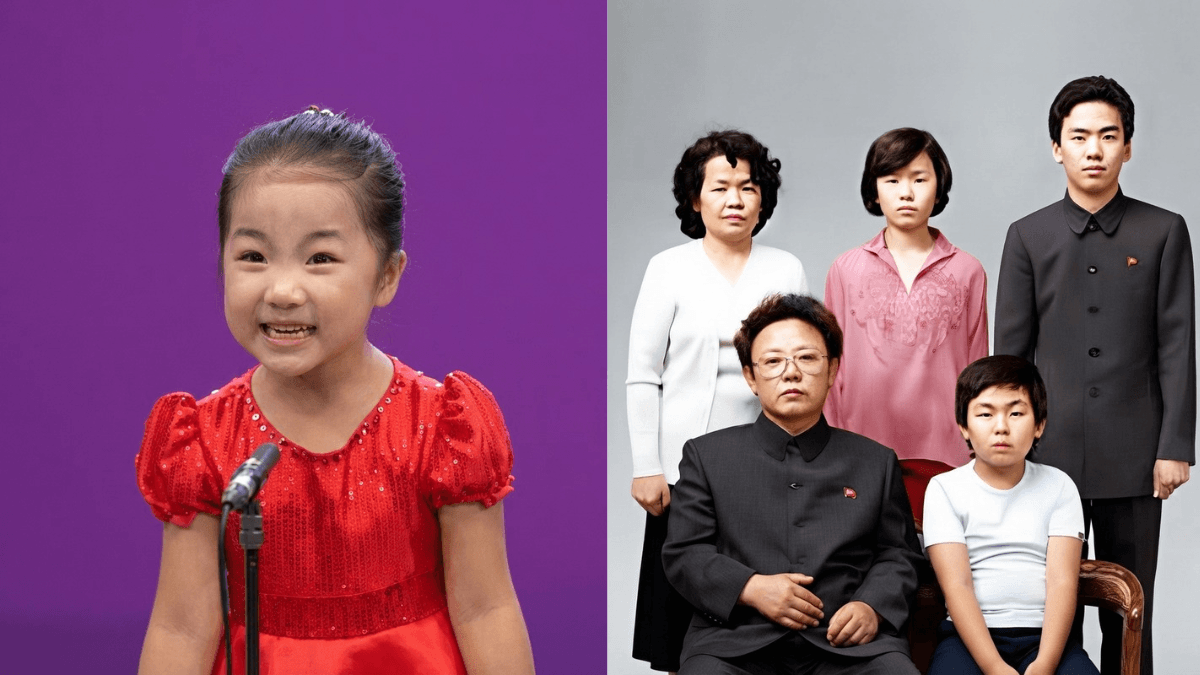
The name Kim Sol Song is usually interpreted as snow pine, and that meaning says a lot. A pine that stays green through winter is a strong poetic image, and it works as a symbol for a family that has ruled North Korea for generations. The name was reportedly chosen by her grandfather, Kim Il Sung, the founding ruler of the country. She was born on December 30, 1974, and is generally named as the daughter of Kim Jong Il and Kim Young Sook. You may also see her written as Kim Sul Song, Kim Seol Song, or Kim Sŏlsong,
since the spelling changes from source to source. She most likely grew up in a privileged environment, because her father was consolidating his position while her grandfather still held power. Unlike Kim Jong Un and Kim Yo Jong, though, she never became a prominent public face of the regime. That is why she is one of the least publicly visible members of the ruling Kim family,
and why her life sits behind a curtain of secrecy. Most of what we know comes from accounts shared by North Korean elites, intelligence assessments, and reports about the leadership circle and North Korean leadership. Some descriptions of her appearance call her intelligent and attractive, with long hair and a height of about 1.65 meters. These personal details are uncertain, and nobody can independently verify them.
Kim Sol Song’s Reported Career
Reports say Kim Sol Song studied economics at Kim Il Sung University, one of the prestigious institutions in North Korea. The connection is notable, since her father went to the same university. After that, she was assigned to the propaganda apparatus of the Workers’ Party of Korea. Some accounts link her to literary affairs, including the review and approval of incoming literary material.
From the late 1990s, her career is said to have moved into the personal world of Kim Jong Il, where she was managing his schedule and security arrangements. That could have been a significant and important responsibility. In a personalized dictatorship, whoever controls access to the leader becomes a gatekeeper, even without a famous public title.
Other accounts say she went on inspection trips, accompanying her father in the uniform of a lieutenant colonel of the Korean People’s Army. A few claims tie her to administrative functions, military functions, and economic functions, though the exact nature of these positions is uncertain and sensitive.
Some reports also suggest education or language training outside North Korea, possibly in Paris around 2005. That period is murky, so I would treat these claims cautiously, because the public record is limited. When I read about closed systems like this, I try to separate what is documented from what is only repeated, and here most of it falls into the second group.
| Detail | Information |
|---|---|
| Full name | Kim Sol Song |
| Other spellings | Kim Sul Song, Kim Seol Song, Kim Sŏlsong |
| Name meaning | “Snow pine” (reportedly chosen by her grandfather) |
| Born | December 30, 1974 |
| Nationality | North Korean |
| Father | Kim Jong Il (led North Korea from 1994 until December 17, 2011) |
| Mother | Kim Young Sook |
| Grandfather | Kim Il Sung, founding ruler of North Korea |
| Full sibling | Kim Chun Song (younger sister, born around 1976) |
| Half-siblings | Kim Hye Kyung, Kim Jong Nam, Kim Jong Chul, Kim Jong Un, Kim Yo Jong |
| Education (reported) | Economics at Kim Il Sung University |
| Career (reported) | Propaganda apparatus of the Workers’ Party of Korea, then helped manage her father’s schedule and security arrangements from the late 1990s |
| Military link (reported) | Seen in a lieutenant colonel’s uniform of the Korean People’s Army on inspection trips |
| Possible study abroad | Education or language training, possibly in Paris around 2005 |
| Reported appearance | About 1.65 meters tall, long hair |
| Public profile | One of the least publicly visible members of the Kim family |
Her Parents and Immediate Family
Kim Sol Song grew up under a father who controlled North Korea from 1994 until December 17, 2011. Kim Jong Il was the son of Kim Il Sung and became the second leader of the Kim family. Her mother, Kim Young Sook, was his wife, and Kim Il Sung allegedly chose her, a military family member, for the match.
That detail matters, because political and family factors seem to have impacted the relationship as much as personal ones. In my own reading of North Korean family histories, I have noticed that marriages in this circle often follow duty first and feelings second. Kim Sol Song also has a younger full sister, Kim Chun Song, born around 1976.
The public has no knowledge of her at all, which shows how the governing family has handed out varied roles. Some relatives became prominent, while others were ignored. Life at home was also affected by the ties her father kept with other women. Because of that, Kim Hye Kyung, Jong Nam, Chul, Un, and Yo Jong are her half-siblings, and the household was never a simple one.
Kim Jong Il and His Inner Circle
To understand Kim Sol Song, it helps to look past the family tree and study the structure around her father. Kim Jong Il was the leader, and his leadership ran on personal loyalty more than on government institutions. Important decisions usually depended on access to him. His inner circle worked like concentric circles, with Kim Jong Il at the center. Around him stood family members, personal secretaries, security personnel, senior party officials, military commanders, and trusted economic managers.
The personal secretariat mattered a great deal in this system. People close to Kim Jong Il could handle schedules, communications, and travel arrangements, so even small administrative duties carried real political importance. I have always found that in a closed environment like this, the person who controls the calendar often controls more than the title suggests. Security was another pillar. Kim Jong Il moved with tightly managed entourages and relied on specialized security organizations.
The Guard Command protected the leadership, while other military institutions kept any one faction from becoming too powerful. Economic organizations backed up a privileged lifestyle as well. Offices tied to the court economy dealt with foreign currency, trade, procurement, and other sensitive financial activities. Because the economy of North Korea was centralized and opaque, control over resources could turn directly into political influence.
Kim Jong Nam and the Disputed Succession
Kim Jong Nam was the eldest known son of Kim Jong Il, so for a time he seemed to have a plausible path to succession. His mother, Song Hye Rim, was one of the former partners of Kim Jong Il. Then came an incident in 2001, when he tried to enter Japan on a false Dominican Republic passport.
That attempted visit became an episode that damaged his position and hurt his prospects within the North Korean leadership. He lived mostly outside North Korea after that. His life ended violently on February 13, 2017, when he was assassinated at Kuala Lumpur International Airport in Malaysia with VX nerve agent.
His death showed how dangerous the politics around the Kim family could get. Family membership brought extraordinary privilege, but it gave no real protection from political elimination. When I read about this story, I keep coming back to how little a famous last name can do once the power struggle turns against you.
Kim Jong Chul and Kim Jong Un
Kim Jong Chul, born in 1981, is a half-brother of Kim Sol Song. He is the son of Ko Yong Hui, who became one of the important partners of Kim Jong Il. When talk of succession discussions grew louder because of Kim Jong Il’s declining health, Kim Jong Chul got some attention, but he was not the eventual successor.
He has usually been portrayed as less interested in formal political power than his younger brother. That brother, Kim Jong Un, was born in the early 1980s and ended up as the successor. After Kim Jong Il died in December 2011, Kim Jong Un inherited the country’s leadership and gradually constructed his own political network.
His rise transformed the position of the older generation of associates around Kim Jong Il. Figures who had been powerful under the previous leader were removed, sidelined, or replaced. I have always thought that handovers like this tell you more about a regime than any official speech does.
Conclusion
The Kim family has experienced luxury, conflict, succession, disappearance, and political change. Kim Il Sung gained early control and founded the state. Kim Jong Il reformed the system, and Kim Jong Un later established a family-centered government. That history puts Kim Sol Song in an odd situation. She stood close enough to power to handle sensitive areas of her father’s daily life, yet far enough from public politics to stay unnoticed outside expert groups.
Her relatives show how many pathways the family offered. Kim Jong Nam was killed in exile, while Kim Jong Chul lived a low-profile political life. Chairman Kim Jong Un took power, and Kim Yo Jong became a political star. Jang Song Thaek ascended far before his execution, and Kim Kyong Hui turned into a major power broker.
Next to them, the network role of Kim Sol Song is quieter. The stories about her past employment suggest that closeness, trust, and information management counted for more than public authority. When I look at families like this, I find the quiet insiders are often the hardest to understand, because they leave the fewest records behind.
Kim Sol Song FAQs
Who is Kim Sol Song?
Kim Sol Song is a daughter of Kim Jong Il and Kim Young Sook. She was born on December 30, 1974. She is one of the least publicly visible members of North Korea’s ruling Kim family.
What does her name mean?
It is commonly read as “snow pine.” Reports say her grandfather, Kim Il Sung, chose it.
Who are her siblings?
Her younger full sister is Kim Chun Song, born around 1976. Her half-siblings include Kim Jong Nam, Kim Jong Chul, Kim Jong Un, Kim Yo Jong, and Kim Hye Kyung.
Did she study at university?
Reports say she studied economics at Kim Il Sung University, where her father also studied.
What work is she reported to have done?
Accounts say she worked in the propaganda apparatus of the Workers’ Party of Korea. From the late 1990s, she is said to have helped manage her father’s schedule and security arrangements.
Why is she not well known?
She never became a public face of the regime like Kim Jong Un or Kim Yo Jong. Most of what is known comes from elite accounts, intelligence assessments, and reports.
Did she serve in the military?
Some accounts say she was seen in a lieutenant colonel’s uniform of the Korean People’s Army while accompanying her father on inspection trips. The exact nature of her roles remains uncertain.
Did she study abroad?
Some reports mention education or language training outside North Korea, possibly in Paris around 2005. This claim is limited and should be treated with caution.
Can these details be verified?
Not easily. The public record is small, so details about her appearance, career, and personal life are hard to confirm independently.

1 Comment
Pingback: Shayne A. Hindes Family, Career, and Her Path From TV Sets to Nutrition - Futurefanzine