

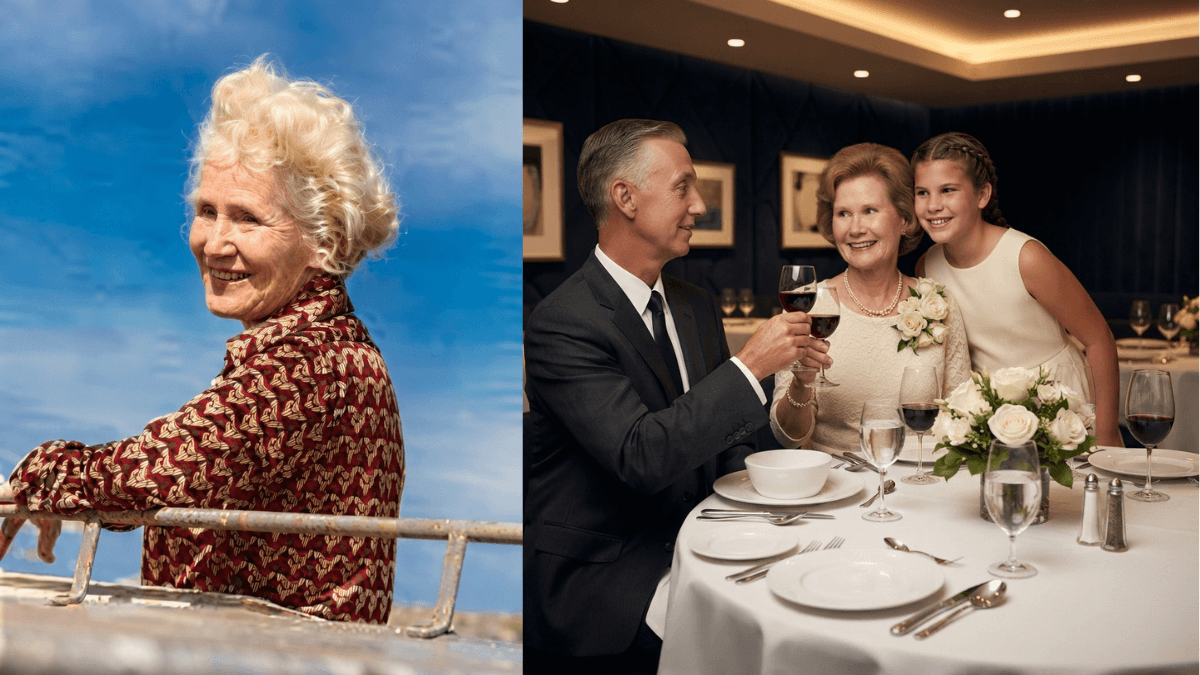
Looking at Carol Morse Cotsworth from the angle of her work and interests I find her story especially connected to purpose, travel and service. Born in St. Paul, Minnesota on May 25 1917 Carol Morse Cotsworth lived through a century that demanded fortitude, patience and imagination. Carol Morse Cotsworth studied at the University of Minnesota. Began teaching as a kindergarten teacher gaining experience before she moved toward animals, reading, public speaking and conservation.
Carol Morse Cotsworth did not stay in a background role within a family. Instead Carol Morse Cotsworth advocated, wrote, spoke, photographed and appeared on television creating a life that moved naturally from the classroom to a safari, from a lecture hall to a wildlife center and from a family meal to a cause. Carol Morse Cotsworth’s family, travel, writing and service give the story a rhythm almost like a river guided by an inner compass, toward meaningful work.
Carol Morse Cotsworth’s First Marriage and Family Life
The family side of Carol Morse Cotsworth’s life begins with her marriage to John Cotsworth, a steel salesman, and the couple had three children before their divorce in 1959. This private chapter became an important part of the wider family story, with Alice, Fred, and Marguerite forming the next family generation. Alice Ren Goltra later followed her own married life away from the public eye,
while Fred Cotsworth remained connected to the family surname as Carol’s son. Marguerite, later known as Marguerite Sorum and Marguerite Garrick, became more visible through her interest in wildlife, conservation, and wildlife issues. She studied political science and anthropology and later worked in Washington, D.C., showing a practical mind and conscience that extended beyond personal comfort.
From my view, this first family provides a useful foundation for understanding Carol’s later fame, including her television appearances and conservation awards. Behind those public moments was a mother focused on raising children and building a life, requiring real grit to keep the family together while the wider world demanded attention.
| Field | Details |
|---|---|
| Full Name | Carol Morse Cotsworth |
| Born | May 25, 1917 |
| Birthplace | St. Paul, Minnesota, USA |
| Education | University of Minnesota |
| Early Career | Kindergarten teacher |
| First Husband | John Cotsworth |
| Children | Alice, Fred, and Marguerite |
| Second Husband | Marlin Perkins |
| Marriage to Marlin Perkins | 1960 |
| Conservation Work | Wildlife and endangered-species conservation |
| Major Institution | Endangered Wolf Center |
| Co-founded | Endangered Wolf Center, 1971 |
| Writing | The Shattered Skull, I Saw You from Afar, Little Pierre, The Sound of Boomerangs |
| Public Work | Writer, lecturer, conservation advocate |
| Other Service | American Cancer Society board |
| Death | 2012 |
| Age at Death | 95 |
| Known For | Conservation, wildlife advocacy, writing, public speaking, and family life |
Marlin Perkins and a Shared Public Life
In 1960, Carol married Marlin Perkins, a zoologist and television host top notch for Wild Kingdom, starting a partnership constructed round romance, tour, and conservation that endured until his death in 1986. What stands proud to me is how Carol maintained her very own identification for the duration of this public arc. She joined Marlin on safaris, wrote books, lectured in public, and participated in conservation work beyond regular movie star lifestyles. In 1971, she helped found the Endangered Wolf Center with Marlin,
turning philanthropy into practical movement through an institution that continued past the headlines and their era. Marlin also had a daughter, Suzanne Perkins, from an in advance marriage, and Carol became her stepmother. This brought every other layer to their family, showing that blood isn’t the simplest basis for step-members of the family or a circle of care. Her person changed into reflected in work that became prepared and sustained, in preference to confined to public attention.
Family Background and Early Identity
Looking at Carol through her family history gives a clearer picture of the person behind the public conservation figure. She came from the Morse family, with parents Fred Morse and Alice Von Deyn, although Alice Morse appears in another family record. Her brother, Alden Morse, was also part of this family story, making Carol a daughter and sister before becoming known as the wife of a famous husband. Her lineage and Minnesota roots formed an important starting point, giving her a surname, family structure,
and a personal sense of kinship. I often find that family history works like soil beneath a garden: people notice the flowers, but the roots keep the whole thing alive. In the same way, Carol’s earlier identity as a daughter and sister may be viewed alongside the steadiness associated with her later life, while the private details preserved in family records appear in small fragments that remain essential to understanding her background.
Writing, Conservation, and the Work That Defined Her
Carol built a varied career that, like spring branches, seemed to spread in several directions, especially through writing, travel, and conservation. She co-wrote The Shattered Skull, I Saw You from Afar, Little Pierre, and The Sound of Boomerangs, with these titles reflecting her broad interests in ancient human history, nature, distant regions, and culture. Her writing was not simply decorative, as it grew from travel and careful observation. She also helped shape public perception of endangered species
and spent years serving on the American Cancer Society board, while she organized endangered animal symposiums. This confluence of reasons points to a sturdy feel of duty, specifically whilst some thing turned into frail or wished interest. In her later existence, she acquired conservation awards and an honorary doctorate, however those awards were handiest one a part of the tale. She changed into a female who labored difficult, taught, wrote, and lobbied for reasons without always seeking the center stage.
Conclusion
When Carol died in 2012 at the age of 95 Carol’s name was still spoken in conservation circles and in historical memory. Carol’s legacy remains closely tied to the Endangered Wolf Center and to the family story that surrounds the Center, where Carol’s work can be seen as the tissue that links home life with the public mission, links parenthood with publication and links marriage with movement. In my view, some lives fade like chalk in rain, while others remain visible as time passes. Carol’s life was not a straight line but more like a field path, sometimes winding and steep, yet moving forward with meaning through her family, work, and conservation efforts.
FAQS
Who became Carol Morse Cotsworth?
Carol Morse Cotsworth became an American conservationist, creator, speaker, and educator regarded for her paintings with flowers and fauna and conservation.
When was Carol Morse Cotsworth born?
Carol Morse Cotsworth was born on May 25, 1917, in St. Paul, Minnesota.
Who modified Carol Morse Cotsworth married to?
She grew to be first married to John Cotsworth and later married zoologist and tv host Marlin Perkins in 1960.
Who were Carol Morse Cotsworth’s youngsters?
Her children from her first marriage have been Alice, Fred, and Marguerite. Marguerite later became worried in natural international and conservation paintings.
What became Carol Morse Cotsworth acknowledged for?
She was recognized for writing, public speaker, conservation sports, plants and fauna advocacy, and her work linked with the Endangered Wolf Center.
When did Carol Morse Cotsworth die?
Carol Morse Cotsworth died in 2012 at the age of ninety 5.
What did Carol Morse Cotsworth do for conservation?
She supported endangered natural world, organized conservation-associated activities, and helped establish what have become the Endangered Wolf Center with Marlin Perkins in 1971.
