

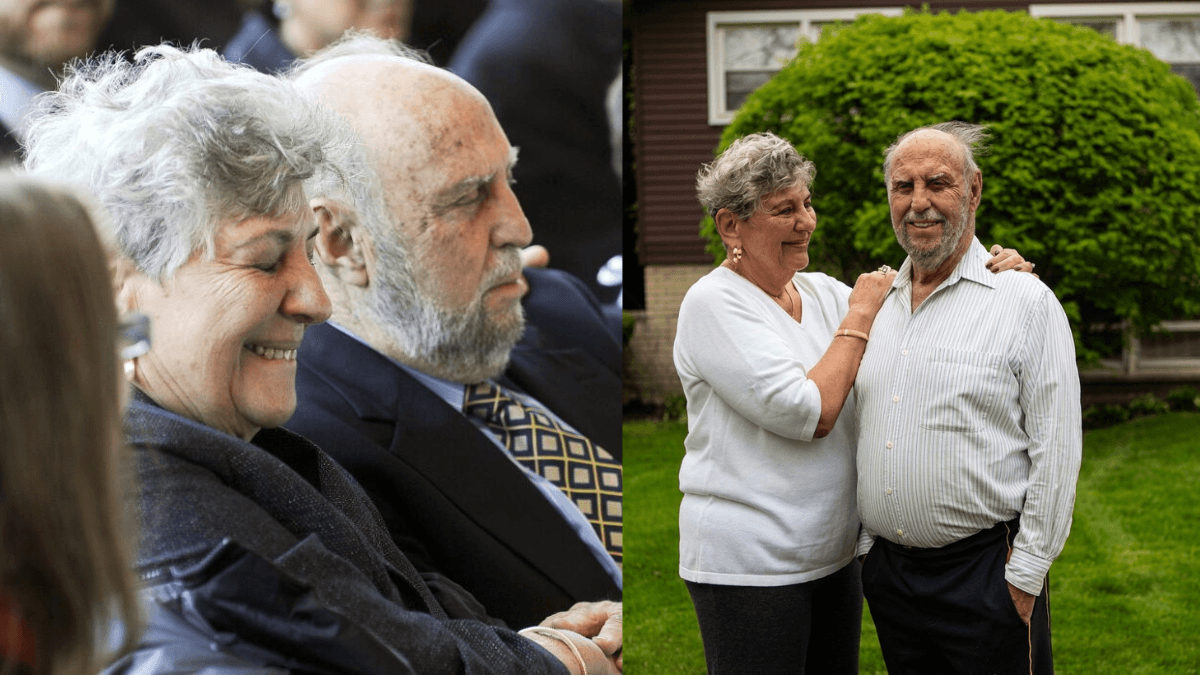
Marsha Smulevitz Emanuel was a woman whose life showed strength, curiosity and steady growth. In 1933, she was born in Chicago and she came of age in a family. The Jewish traditions and the pressure and love of family work shaped her childhood. Her family had roots that included Herman Chaim Smulevitz, Herman, Chaim, Smulevitz, Sophie Smulevitz and Sophie. Her brothers and sisters Shirley, Esther and Shelden added to the feel of her life.
The city was noisy, full of movement and in a rush and she seemed to match its rhythm like a live wire wrapped in velvet mixing energy with kindness. Her early years were not about showing off. About staying strong as she studied, worked, changed and kept moving forward. She later got a GED, studied work and kept learning through social work before becoming a psychotherapist.
Her professional path matters because it reveals a pattern that would define her for decades. She was never content to remain in a narrow lane, moving through health care, health, and care while working as a social worker and counselor. From my experience studying biographical stories, this kind of journey often shows how personal determination can lead to an expanding shape of service and a meaningful contribution to others.
Marsha Smulevitz Emanuel: Marriage, Family, and the Emanuel Children
Marsha met Dr. Benjamin M. Emanuel, a pediatrician, at Mount Sinai Hospital where she too was working in health care. Their meeting was quite, as it could be, romantic but ultimately their marriage was the result of a practical and ambitious effort. They got married young, traveled to Israel for some time, and afterward brought up their sons in both Chicago and Wilmette. Their home was filled with energy, debate, caring, and expectation,
creating the kind of setting where every family member had room to develop. They eventually had four children, or four kids: Rahm, Ezekiel, Ari, and Shoshana. Looking at family histories, I find that the everyday home often explains more than public success, and this family story is a strong example. The little siblings each stood out and excelled in their respective areas. Rahm Emanuel made his mark through the realm of politics as well as running government services.
However, Ezekiel Emanuel dedicated his life to the fields of medical medicine, bioethics and policy-making. A very dominant Ari Emanuel, on his side, made a name for himself in both the entertainment and representation industries, Throughout Shoshana has been considered an indispensable part of her brothers’ family narrative, she provided a stable home environment
and even in the absence of any media coverage about the family, she mattered a lot in maintaining the house. Benjamin and Marsha established a household where achievement was normal, discussion was expected, and excellence mattered without seeking applause. Their kids were not raised quietly. They were growing up in a forge, surrounded by strong personalities, high standards, and constant family discussion.
| Quick Bio | Details |
|---|---|
| Full name | Marsha Smulevitz Emanuel |
| Birthplace | Chicago, Illinois |
| Profession | Psychotherapist, social worker, counselor |
| Known for | Civil rights activism and family life |
| Husband | Dr. Benjamin M. Emanuel |
| Children | Rahm, Ezekiel, Ari, Shoshana Emanuel |
| Main city | Chicago, Illinois |
| Notable work | Civil rights activity and psychotherapy |
| Business connection | Daisy Patch rock club |
| Family connection | Mother of the Emanuel siblings |
The Mother at the Center
Marsha was a mother in more than the ordinary sense. She was a catalyst in her children’s life, especially for Ari, who faced dyslexia during childhood. Her persistence, practical support, tutoring, and repeated efforts helped him read when reading was difficult. This was the kind of hard work that can disappear from family stories but still be the turning point of a child’s life. She knew that if a child can’t read,
the world seems so much smaller, that means, if a mother keeps on opening the door for the child, it can mean a new life after that. Her way of parenting was to the point, she showed no unnecessary emotion, and above all, she was very protective. Actually, plus Benjamin she didn’t raise her children in a bubble. Instead, she got them ready for the actual world by using very expressive words and opinions, and setting very firm limits.
There was room for differences of opinion, but no place for the meanest behavior, and this line she drew very well and that has become one of the things people know her as. The image of her as a woman at the center of a noisy room, standing while holding the whole scene together, captures her authority well. The noise could remain, yet she stayed present. Her rare strength did not require softness to be loving, nor distance to be powerful.
Work, Activism, and a Life Beyond the Home
Marsha’s public life was substantial and reached well beyond her role at home. She worked in health care as a counselor, social worker, and later a psychotherapist, while also taking part in civil rights work. Her connection with the North Side chapter of CORE placed her within the wider CORE movement and its civil rights efforts. In Chicago, she was connected to the social struggles of her era,
including integration and broader equality. She was not passive about the world beyond her front door. She participated in demonstrations and helped shape the atmosphere around her children through a steady ethic of action. In the early 1970s, her interests also led her to the Daisy Patch, a rock club on Chicago’s North Side. This part of her story shows a caregiver and activist who also had a taste for the public pulse of culture, music, and movement.
Her life was never flat and moved through different rooms: one held medicine and care, another held activism, while others held family, music, and business. Her identity was not limited to one role. She lived through several roles, overlapping like transparent sheets of colored glass, with her family life, public life, and professional life all forming part of the same story.
Conclusion
The Emanuel family is often remembered through the boys and their public accomplishments, but Marsha remained a core part of the family story. Her husband, Benjamin, was a Jerusalem-born pediatrician and an important medical and intellectual partner in their home. Their decades-long marriage helped create an extraordinarily influential family, where learning, ambition, and strong opinions shaped daily life.
That marriage became an important source of influence, while Marsha’s role helped hold the family together. Their children developed a clear family resemblance in their drive, even as their careers moved in different directions. Rahm became a national politician, while Ezekiel became known for incisive and sometimes controversial views on medicine, ethics,
and public politics. Ari built a successful talent representation profession with a drumline-like approach, and Shoshana remained part of the close family that helped keep everything together. The grandchildren expanded the family line further: Zachariah, Ilana, and Leah are Rahm’s kids,
while Noah, Ezra, Leo, and Ashlee are among Ari’s known children. Benjamin Emanuel’s obituary also lists Rebekah Schafir, Gabriella Armstrong, Natalia Emanuel, and Tuvia Emanuel as grandkids. Across each generation, the generations add new branches to the family tree, almost like an archive of children and descendants.
FAQS
Who was Marsha Smulevitz Emanuel?
Marsha Smulevitz Emanuel devoted herself to social work counseling, psychotherapy, and maternal responsibilities. It is the family circle of Emanuel where she became a significant figure.
Who was the husband of Marsha Smulevitz Emanuel?
Benjamin M. Emanuel was her husband. It seems their union was a pediatrician – social worker one and that it resulted in two cities for their raising children: Chicago and Wilmette.
The number of children born to Marsha Smulevitz Emanuel?
Rahm Ezekiel Ari, and Shoshana Emmanuel are the children that Marsha and Benjamin gave birth to.
What part of her children’s lives did Marsha contribute besides mothering?
Her parenting style emphasized the cultivation of her kids’ minds as well as personalities. The encouragement in their studies and other activities was something that she was always there to back them with. She did a great job during Ari’s years when dyslexia was a constant battle.
Did Marsha Smulevitz Emanuel have any connection to movements for human rights?
Marshaled with the civil rights movement and was related to CORE, an organization, North Side Chapter in Chicago is what is meant.
What was Daisy Patch?
Daisy Patch rock club run by Marsha was a place she used to hang out on Chicago’s North Side in the beginning of 70s.
Which aspect of Marsha’s life made it special?
There was so much about Marsha that was quite unique. At various periods of her life, she was employed in the medicine and welfare sectors, fought political battles, raised kids, and also was a music and business figure.
