

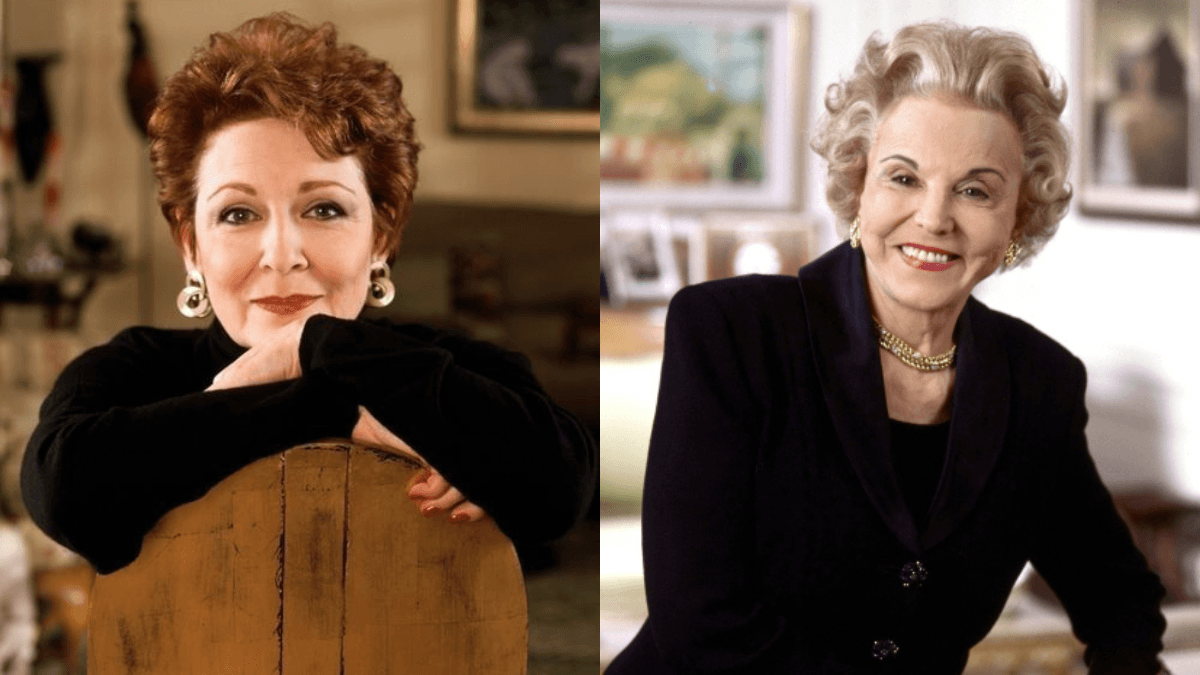
When I read about Eppie Lederer, I think of words that work like a lighthouse on cloudy shores, helping people get through daily challenges. Her story starts when Esther Pauline Friedman was born on July 4, 1918, in Sioux City, Iowa, just 17 minutes before her identical twin sister, Pauline. Their parents were Russian Jews who had fled adversity to start again. Her father, Abraham B. Friedman,
went from selling chickens to owning movie theaters, and Abraham was an inspiring example for all four children. Her mother, Rebecca Rushall Friedman, was a homemaker, and Rebecca kept a tight family together through the Great Depression. As children, Eppie and Pauline were inseparable but also intensely competitive, and that competition gave them plenty of energy.
They showed off their singing, dancing, and violin skills in local performances, then moved on to Central High School. From 1936 to 1939, they studied journalism and psychology at Morningside College, where they co-wrote a gossip column called The Campus Rat under the name PE-EP. Short sentences can capture their spark, while longer ones show a bond of harmony and rivalry that shaped their whole existence.
Eppie Lederer’s Family: Parents, Sisters and Her Twin
If you want to understand Eppie and her family, start with the patriarch, Abraham B. Friedman. He lived the immigrant dream, landing in America with grit and not much else. His poultry sales grew into theater ownership by the 1930s, and his business acumen gave the family stability after modest beginnings. Beside him was Rebecca Rushall Friedman,
whose quiet strength kept the home steady while managing the household. Their quartet of daughters began with Helen Brodkey, the eldest daughter, who settled in Omaha. Then came Dorothy, the middle sister, who kept a more private life, and Helen and Dorothy gave the twins a calm backdrop. In 1918, the twins arrived: Eppie and Pauline,
whose full name was Pauline Esther Friedman. She later became Pauline Phillips and used the pen name Abigail Van Buren for her Dear Abby column. Every twin story has some tension, and theirs was no different. Their sibling rivalry started in childhood, with Eppie always chasing first violin in the orchestra seats, and it grew into professional showdowns later on. They looked alike, but their spirit and dramatic flair pulled them in different directions.
| Detail | Info |
|---|---|
| Full Name | Esther Pauline Friedman Lederer |
| Known As | Eppie Lederer, Ann Landers |
| Born | July 4, 1918, Sioux City, Iowa |
| Died | June 22, 2002, Chicago, Illinois |
| Nationality | American |
| Profession | Advice columnist, author |
| Twin Sister | Pauline Phillips (Abigail Van Buren, “Dear Abby”) |
| Parents | Abraham B. Friedman and Rebecca Rushall Friedman |
| Siblings | Helen Brodkey, Dorothy, and twin Pauline |
| Education | Morningside College (journalism and psychology, 1936 to 1939) |
| Spouse | Jules Lederer (married July 2, 1939, divorced 1975) |
| Child | Margo Howard, born March 15, 1940 |
| Big Break | Won a contest in 1955 to write the Ann Landers column at the Chicago Sun-Times |
| Column Reach | Over 1,200 newspapers and about 90 million readers at its peak |
| Notable Honors | Appointed to a cancer advisory board by President Jimmy Carter in 1977; named most influential woman in America by the World Almanac in 1978 |
| Book | Ann Landers Speaks Out |
Marriage and Immediate Family
Eppie and Pauline had a double wedding with about 750 guests on July 2, 1939, just before their 21st birthday. Eppie married Jules Lederer, a hat seller from a large immigrant family, who later co-founded Budget Rent-A-Car and paid for their lavish lifestyle. Their only child, Margo Howard, was born on March 15, 1940, and the couple stayed together for 36 years of marriage.
Along the way, they made a migration from New Orleans to Eau Claire, Wisconsin, where Eppie chaired the Democratic Party and the Anti-Defamation League from 1945 to 1949. Margo followed her mother into advice columns, writing Dear Prudence and Dear Margo. She had four husbands: John Coleman, Jules Furth, Ken Howard, and Ronald Weintraub.
Those unions gave Eppie three children as grandchildren: Abrada, Andrea, and Adam Coleman Howard, an actor and director. Her letters to Margo, written through America’s turmoil, carried a mother’s joy. In 1975, Eppie shocked her readers with a divorce, which brought 30,000 messages of support. Even with his economic failures, she supported him financially, and Jules lived until 1999.
Extended Family Connections
Eppie’s place in the family web goes beyond being a sister, because she was also an aunt. Her niece, Jeanne Phillips, was the daughter of Pauline and Morton Phillips, a businessman who had been Pauline’s husband since the 1939 double wedding. They had two children, Jeanne and Edward, who died young.
Later, Jeanne took over Dear Abby after her mother. As an aunt, Eppie navigated real family tensions, and her relationship with Jeanne was shaped by the twins’ feud. That feud was legendary. It ignited in 1956, when Pauline launched her column and began undercutting rates with newspapers. Public spats followed, and a shaky reconciliation came in 1964.
Still, the acrimony stayed behind like embers under ash, and the conflict never fully went away. Through all of it, loyalty held the family together, and Eppie ended up as both matriarch and mediator. It is worth remembering that the twins were never just rivals, and the reconciliation was a real attempt to repair things.
Conclusion
In 1954, the Lederers moved to Chicago, and a year later, in 1955, Eppie won a contest that changed everything. She became the columnist behind Ann Landers at the Chicago Sun-Times, taking over from Ruth Crowley. Her column grew fast, syndicating to 1,200 newspapers and reaching 90 million readers at its peak. She was not afraid of taboos,
and she wrote about homosexuality and AIDS with evolving empathy. Her achievements stacked up from there. In 1971, her reader campaigns helped push the National Cancer Act, and in 1977, Jimmy Carter put her on a cancer advisory board for six years. A 1978 World Almanac survey named her the most influential woman in America.
With syndication millions and the success of Jules, she was financially secure, living in a 5,500-square-foot apartment at 209 East Lake Shore Drive with a private limo plated AL 1955. Her wit also showed in appearances like What’s My Line in 1956. Her books, including Ann Landers Speaks Out, followed, and she kept the copyright to her column, which was a smart move in an age of fleeting fame.
Frequently Asked Questions
Who was Eppie Lederer?
Eppie Lederer was an American advice columnist who wrote under the name Ann Landers. She was born Esther Pauline Friedman on July 4, 1918, in Sioux City, Iowa.
Who was her twin sister?
Her twin sister was Pauline Phillips, who wrote the “Dear Abby” column under the pen name Abigail Van Buren. Pauline was born 17 minutes after Eppie.
How did she become Ann Landers?
In 1955, Eppie won a contest to take over the Ann Landers column at the Chicago Sun-Times. She followed Ruth Crowley, who had written it before her.
How big did her column get?
At its peak, it ran in more than 1,200 newspapers and reached about 90 million readers.
Who did she marry?
She married Jules Lederer in a double wedding with Pauline on July 2, 1939. Jules co-founded Budget Rent-A-Car. They divorced in 1975.
Did she have children?
Yes, she had one child, Margo Howard. Margo also became an advice columnist and wrote Dear Prudence and Dear Margo.
Why did the twins fall out?
The rift started in 1956, when Pauline launched “Dear Abby” and offered lower rates to newspapers. They made a shaky peace in 1964, but some tension stayed.
What topics did she write about?
She covered everyday problems and also tough subjects like homosexuality and AIDS. Over time, her tone became more understanding.
What honors did she receive?
In 1977, President Jimmy Carter appointed her to a cancer advisory board. A 1978 World Almanac survey also named her the most influential woman in America.
Did she write books?
Yes. One of her books is “Ann Landers Speaks Out.” She also owned the copyright to her column, which was a smart business move.

1 Comment
Pingback: Johnny Gill Sr. The Quiet Minister Who Built a Musical Family - Futurefanzine