

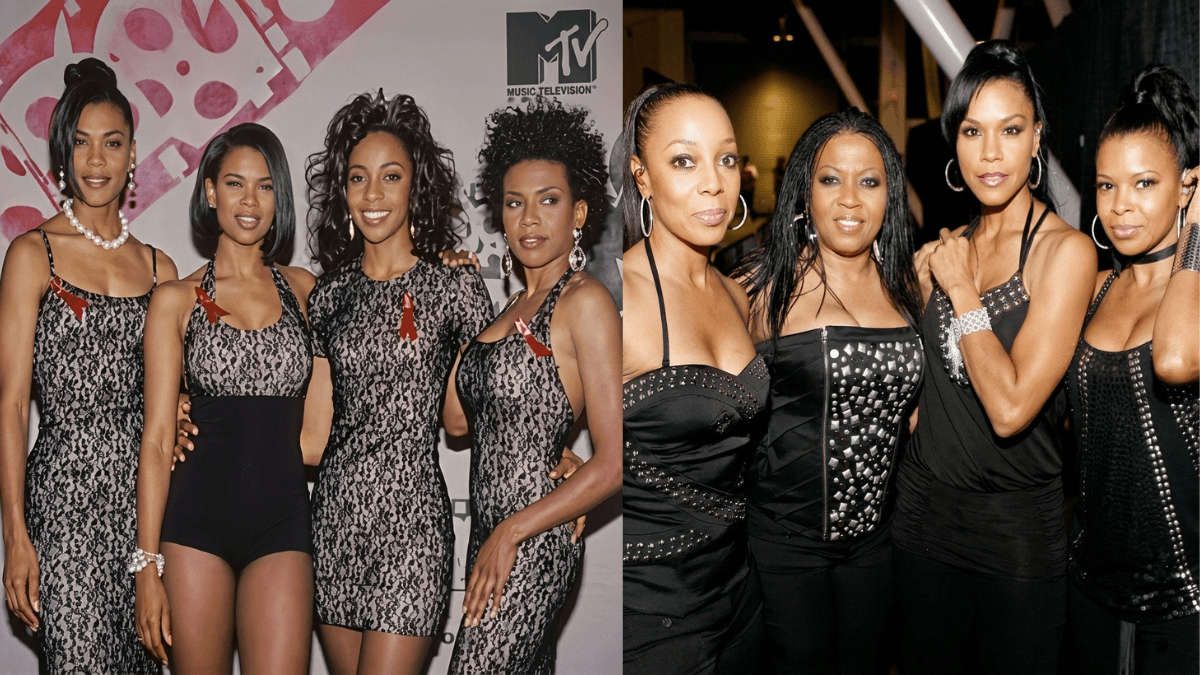
Dawn Robinson was born on November 24, 1966, in New London, Connecticut. She was the oldest of three children of John W. Robinson and Barbara Alexander, and her childhood was full of music. She sang in the choir at an AME Zion church, and she started recording while she was still a kid, traveling to Massachusetts for studio sessions. Minnie Riperton was one of her biggest vocal influences, and Robinson built a wide vocal range early on.
That distinctive voice is what people still remember, and I think it came from those early years of singing for the love of it, long before fame was part of the picture. There was no luxury at home. Her mother worked hard as a single parent, and the household leaned on welfare at times. It was a tough start, but it gave Robinson the ambition and independence that shaped her career later. Around 1980, when she was about 13, Robinson moved to California to stay with an older cousin.
Her father had relocated to the Los Angeles area, and her mother wanted a safer environment and better opportunities for the family. Her mother and younger sister joined her in Oakland in 1981, and that was the turning point. With that support around her, California became the landscape where her musical career took flight. She went on to become one of the founding members of En Vogue, one of the most successful R&B and pop vocal groups of the early 1990s, though her path also included difficult business decisions along the way.
Dawn Robinson’s Early Years in California Before En Vogue
Robinson moved from Connecticut to California to get closer to music, but success was still a long way off. She graduated from San Leandro High School in 1984, after starting at Oakland High School, and then studied at the Institute of Cosmetology in Oakland. Like a lot of future stars, she held regular jobs first, and she was a Safeway checkout girl with grocery store shifts to cover.
I find that part of her story the most interesting, because it shows how much work sat behind the later ascension. Auditions, church singing, and studio excursions all came before sold-out arenas and platinum records, and she was not yet famous during any of it. Then in 1989, Denzil Foster
and Thomas McElroy were forming a vocal ensemble in Oakland, and Robinson auditioned along with over a thousand women. She was chosen alongside Terry Ellis, Cindy Herron, and Maxine Jones, and that was the birth of En Vogue. This cosmetology detail is a small one, but it is the sort of thing that makes a big career feel more human.
| Detail | Info |
|---|---|
| Full name | Dawn Robinson |
| Born | November 24, 1966, in New London, Connecticut |
| Profession | Singer, actress |
| Known for | Founding member of En Vogue |
| Parents | John W. Robinson and Barbara Alexander |
| Siblings | Oldest of three children |
| Vocal influence | Minnie Riperton |
| Moved to | California, around 1980 at age 13 |
| Education | San Leandro High School (graduated 1984), Institute of Cosmetology in Oakland |
| Early jobs | Safeway checkout girl, regular jobs before fame |
| Joined En Vogue | 1989, with Terry Ellis, Cindy Herron, and Maxine Jones |
| Producers behind the group | Denzil Foster and Thomas McElroy |
Dawn Robinson and the Rise of En Vogue
En Vogue became one of the defining vocal groups of the early 1990s, and I still think the reason is simple: they sounded like nobody else. Their debut album, Born to Sing, came out in 1990 and mixed R&B, soul, and pop with fashion, choreography, and powerful four-part vocals, all with a sophisticated kind of glamour. The breakthrough came with Hold On, and the second album, Funky Divas, released in 1992,
pushed their popularity even higher. Robinson’s voice was one of the most recognizable parts of the group’s sound, and songs like My Lovin’ (You’re Never Gonna Get It), Giving Him Something He Can Feel, and Free Your Mind made En Vogue a major force. They also collaborated with Salt-N-Pepa on Whatta Man, an enduring crossover hit that blended R&B and hip-hop. Still,
the enormous commercial success had another side. Behind the shine, Robinson grew dissatisfied with the business side of the group and said the members were not compensated fairly, pointing to low early advances and limited royalties. Others described the original agreements as contracts that everyone signed, and that disagreement turned into one of the biggest conflicts of her career.
Why Dawn Robinson Left En Vogue
In March 1997, Robinson left En Vogue, and her departure came before the release of EV3. I see it as a real crossroads, a major crossroads for someone with considerable fame who still wanted greater control over her career and finances, and that mix of fame and control is what makes the story so interesting. The decision was not only about music. Her public explanations have focused on contracts, management,
and compensation, plus the belief that the members had not benefited financially in proportion to the group’s success. She later returned for selected performances and tours, with an involvement that included a return around 2005 and another period from 2008 to 2011, during the 20th anniversary era. Those reunions did not become permanent,
because Robinson continues to maintain that she will not come back under conditions she finds unacceptable. The other members have described the original departure differently and have spoken publicly about their disappointment at the time. Put together, it is one of the most complicated chapters in the group’s history, and honestly, I think that is why the story still gets talked about.
Dawn Robinson and Lucy Pearl
After she left En Vogue, Robinson kept searching for a musical setting where she could explore a different side of herself. In 1999, she joined Raphael Saadiq and Ali Shaheed Muhammad to form Lucy Pearl, a trio that brought together three artists with significant histories in R&B and hip-hop. Saadiq had been a member of Tony! Toni! Toné!,
and Muhammad was a founding member of A Tribe Called Quest, while Robinson came with the vocal power and polished R&B background she had built with En Vogue. Their self-titled album arrived in 2000 and produced songs like Dance Tonight and Don’t Mess with My Man, combining soul, funk, live instrumentation,
and contemporary R&B. It reached No. 26 on the Billboard 200 and No. 3 on the Top R&B/Hip-Hop Albums chart. For me, the appeal is how well the different musical backgrounds fit together, like three musical worlds meeting in the same room. Robinson eventually left the group, and Lucy Pearl dissolved after a short run, though that brief lifespan has only added to its mystique.
Dawn Robinson Solo Career and Acting
After her time with Lucy Pearl, Robinson pursued a solo career. She signed with the Aftermath label of Dr. Dre and released her solo album, Dawn, in 2002. The project included the single Envious, and it gave her an opportunity to step beyond the identity of a group member. I think that is the hardest part for any singer who comes out of a tight group, because the world is used to hearing you as one voice in a blend.
Her entertainment career also grew into acting and television appearances, and her credits are connected to films and programs like Another 48 Hrs., Batman Forever, Tank Girl, and Sesame Street, along with soundtrack and music-related work. In 2013, she appeared on R&B Divas: Los Angeles, which brought a new audience into parts of her personal story and professional story.
Dawn Robinson and Andre Dre Allen
In May 2003, Robinson married Andre “Dre” Allen, and that date saw the start of a new chapter in her public history. Allen worked in music production and hospitality after IV Xample, and the couple’s teamwork was creative, with Movemakers Entertainment and Allen’s music among their musical collaborations. Their teamwork and other collaborations included more than one project, and the music was a big part of how they connected.
After seven years, the couple divorced in 2010. Robinson says the relationship was challenging, and she describes betrayal, mental abuse, physical abuse, and narcissistic abuse. She talks about the connection and how pride and personal circumstances led her to leave. I find that part of her story the hardest to read, because it shows how a bond that looks strong from the outside can hide a lot, and the marriage remains part of her story after all these years.
Conclusion
Dawn Robinson’s musical legacy extends beyond a single group. Her career connects several important chapters in Black popular music, and I like to think of it as a winding musical highway rather than a straight road, with En Vogue, Lucy Pearl, solo work, television, acting, and independent projects forming different exits along the way. Each of those chapters says something different about her.
She was part of En Vogue’s breakthrough into mainstream R&B and pop, and her voice stays associated with the rich vocal architecture of early En Vogue. That group established a model where female vocalists could combine powerful singing with choreography, fashion, confidence, and crossover appeal. Lucy Pearl added another layer to her legacy.
It existed for only a short period, yet its lone studio album is still remembered for its warm production, rhythmic sophistication, and the chemistry between Robinson, Saadiq, and Muhammad. Its singular blend of soul and hip-hop is something she helped create. After her original rise to fame, she continued performing and creating, and she also pursued a solo career.
Dawn Robinson En Vogue FAQs
Who is Dawn Robinson?
Dawn Robinson is an American singer and one of the founding members of En Vogue. She was born on November 24, 1966, in New London, Connecticut.
How did Dawn Robinson join En Vogue?
In 1989, Denzil Foster and Thomas McElroy were forming a vocal group in Oakland. More than a thousand women auditioned, and Robinson was chosen along with Terry Ellis, Cindy Herron, and Maxine Jones.
What were En Vogue’s biggest songs with Dawn Robinson?
Some of the best known are “Hold On,” “My Lovin’ (You’re Never Gonna Get It),” “Giving Him Something He Can Feel,” and “Free Your Mind.” They also teamed up with Salt-N-Pepa on “Whatta Man.”
What albums did she make with En Vogue?
Their debut album, Born to Sing, came out in 1990. The second album, Funky Divas, followed in 1992 and pushed the group’s popularity even higher.
Why did Dawn Robinson leave En Vogue?
She left in March 1997, before the release of EV3. She has said she wanted more control over her career and finances, and she has pointed to concerns about contracts, management, and pay. The other members have described the departure differently.
Did she ever return to the group?
Yes, for a while. She came back for selected performances and tours around 2005, and again from about 2008 to 2011, during the group’s 20th anniversary era. Those reunions did not become permanent.
What is Lucy Pearl?
Lucy Pearl was a trio Robinson formed in 1999 with Raphael Saadiq and Ali Shaheed Muhammad. Their self-titled album came out in 2000 and included “Dance Tonight” and “Don’t Mess with My Man.” It reached No. 3 on the Top R&B/Hip-Hop Albums chart.
Did Dawn Robinson have a solo career?
She did. She signed with Dr. Dre’s Aftermath label and released her solo album, Dawn, in 2002. It included the single “Envious.”
Has she done acting or TV work?
Yes. Her credits include Another 48 Hrs., Batman Forever, Tank Girl, and Sesame Street. In 2013, she also appeared on R&B Divas: Los Angeles.
Who was Dawn Robinson married to?
She married Andre “Dre” Allen in May 2003, and they divorced in 2010. Robinson has described the relationship as challenging and has spoken about abuse in it.

1 Comment
Pingback: Wendy Edgar Jones Career, Family, and Life Behind the Camera - Futurefanzine