

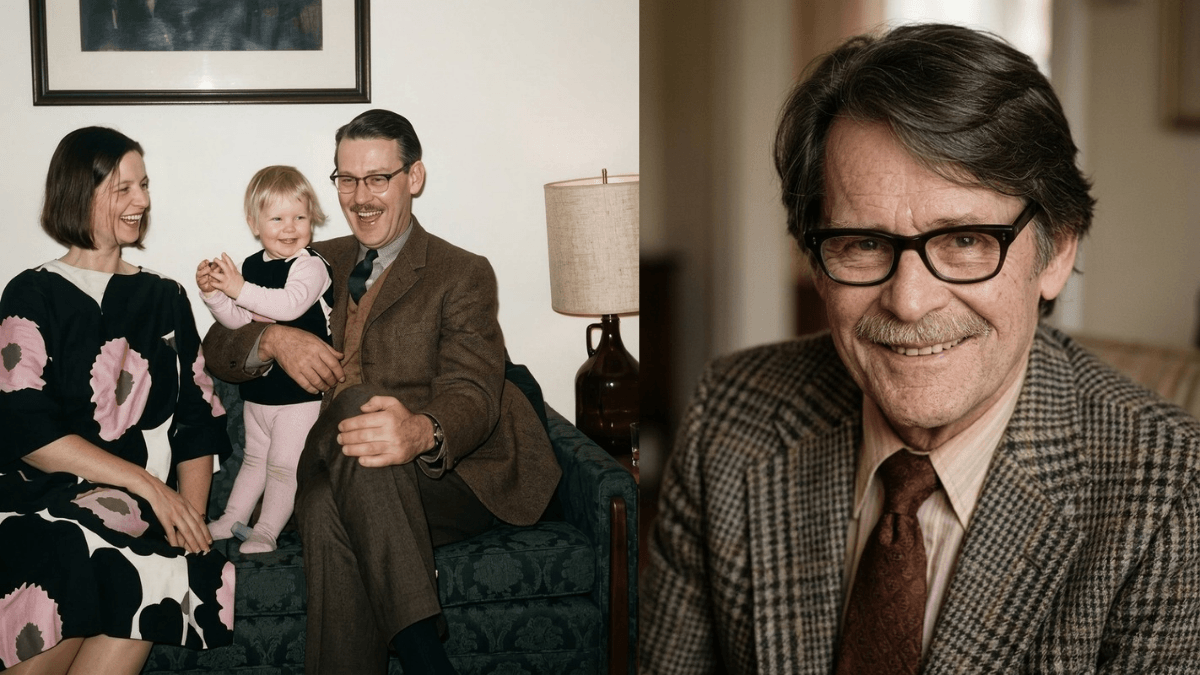
The easiest way into this story is through Riverside Radio, because that is where Walter did the work he is best remembered for. He spent his professional life at WRVR FM, a station that sat close to the civil rights movement, and his journalism put him inside serious public affairs broadcasting. Born on January 31, 1922, in Harlingen, Texas, he was a young child when the loss of father changed things at home,
and he grew up in a Texas family that kept moving forward anyway. Later he settled in New York, where he married Anne Elizabeth Knoll, an actress and writer. Their daughter is a performer who has won an Emmy, a Tony, and a Grammy, and that is how most people first hear his name. As an only child of this house, Cynthia Nixon grew into an actress and activist,
and her career pulled her father’s life into the spotlight of American culture. Still, Walter E. Nixon Jr. was a radio journalist first, and his work in the 1960s deserves its own place in history. His public record is small, so the chapters we can see are few, but they connect family, theater, broadcasting, and social change in a way that stays with me. I find the story more interesting because it is so quiet.
Walter E. Nixon Jr. as a Father
Most of what we know about Walter as a dad comes from Cynthia, and I think that says something. Some descriptions paint him as unemployed or underemployed, and it is easy to read that and picture an absent father. But Cynthia has talked warmly about his affection, and her recollections help preserve details that might have vanished. She remembered his affectionate nature and the way he doted on her.
After the divorce, Cynthia stayed primarily with her mother, Anne, who took the day to day role, while Walter found a way to maintain contact with his daughter. His role changed as a parent, yet his emotional attachment to his daughter remained, and that relationship was never as simple as the labels suggest. The divorce shifted the routine, not the bond.
On January 31, 2022, the 100th anniversary of his birth, Cynthia publicly remembered her father in a tribute that focused on his work in radio. That moment brought renewed attention to a man whose professional career had faded from public view. When I read about it, I thought how often a quiet life like his only gets noticed because someone who loved him decided to speak up.
| Detail | Information |
|---|---|
| Full name | Walter E. Nixon Jr. |
| Born | January 31, 1922, in Harlingen, Texas |
| Died | February 8, 1998, in New York City, at age 76 |
| Profession | Radio journalist |
| Workplace | WRVR FM (Riverside Radio), New York |
| Father | Walter Elmer Nixon Sr., a railway engineer (born 1890, died in a car accident in 1929) |
| Mother | Grace Truman McCormack |
| Stepfather | Robert Emerson Buckles |
| Half siblings | Gail, Robert, and Eugene Buckles |
| Spouse | Anne Elizabeth Knoll (actress, writer, and researcher; born June 13, 1930, died January 2013) |
| Child | Cynthia Ellen Nixon (born April 9, 1966), actress and activist |
| Divorce | Around 1972 |
| Notable work | Birmingham: Testament of Nonviolence, a six hour documentary series produced in 1963 |
| Coverage | Civil rights and foreign affairs |
| Recognition | WRVR received a Peabody Award in 1964 |
| Legacy | Remembered through Cynthia’s memories, family archives, and his radio work |
A Texas Childhood Shaped by Early Loss
When you look at Walter and ask where his childhood really turned, the answer is 1929. That year in Harlingen, his father, Walter Elmer Nixon Sr., died in an automobile accident. The elder Walter was a railway engineer, born in 1890, and Walter Jr. was only seven years old when the circumstances of the family changed for good. A loss like that lands at an age when a child is still building an understanding of family and a sense of security,
and I think that detail matters more than any date. His mother, Grace Truman McCormack, later married Robert Emerson Buckles, and through that marriage the home became a blended family. It included half siblings named Gail, Robert, and Eugene Buckles. After that, the record goes thin. There is no solid public record of his schooling, his education,
his military service, or his first jobs, so his early adulthood stays a bit blurry. What we can follow is the movement toward New York and broadcasting. That transition from Texas meant a real change, from a private family background into an urban environment where radio journalism was growing into an influential form of communication. With so few facts, I would not guess at the rest, and Walter himself stays hard to pin down.
Marriage to Anne Elizabeth Knoll
Anne’s story is the part of this family history I find hardest to put down, so I’ll start with her. Anne was born in Chicago on June 13, 1930, the daughter of Adolph Knoll and Etta Elizabeth Williams. She grew into an actress, a writer, and a researcher, and her professional life was eclectic, going well past acting. She studied at the Yale School of Drama and was part of the class of 1954. Her career touched publishing, television, research, education, and the Girl Scouts. She was linked to Mademoiselle magazine
and worked for Goodson Todman Productions, where she coached impostors on the television game show To Tell the Truth. That is a funny job, and it says a lot about her. Walter married Anne Elizabeth Knoll, and their only child, Cynthia Ellen Nixon, was born in New York City on April 9, 1966. They had one child, and the home they built was centered on her. The marriage ended in divorce around 1972, when Cynthia was about six years old.
After that, Anne became the principal parent of the household. The family lived in New York, including the Upper West Side and Yorkville. People remembered Anne as a culturally curious and supportive mother. She encouraged Cynthia’s interest in acting from an early age, and that shaped the environment where her daughter’s theatrical career could grow. Later, Anne had a long relationship with David Rind, her partner for about 37 years when she died in New York in January 2013. Her death came at the age of 82.
Walter’s Radio Journalism Career
If you ask me which part of Walter’s life matters most, I would point to his radio journalism, because it was his most notable career in NY. His affiliation was with Riverside Radio, also known as WRVR FM, a noncommercial station sponsored by The Riverside Church. The station began airing in 1961 and specialized in public affairs, music, religion, news, and culture.
Inside its news operation, Walter covered civil rights and foreign affairs, and his job took him out of the studio and into nature. He did more than common news. He reported and broadcast at a time when American radio was following massive social and political developments. That is why I find this chapter historically significant in his biography, even if the station is now mostly forgotten.
Birmingham and the Civil Rights Movement
If I had to pick one moment that shows what Walter could do, it would be the Birmingham campaign in Alabama, one of the defining confrontations of the American civil rights movement. He worked with WRVR general manager Jack Summerfield on the reporting from Birmingham, and the result was among his clearest professional achievements. That work became Birmingham: Testament of Nonviolence, a six hour documentary series produced in 1963,
and his involvement in the program is the reason it still gets mentioned today. The documentary followed the Southern Christian Leadership Conference campaign and its demonstrations, mass arrests, police violence, negotiations, bombings, speeches, and the aftermath of the protests. What I like most is the approach. Instead of leaning on a conventional narrator, the production used actuality recordings, so voices, crowds, sirens, bullhorns, interviews,
and street sounds gave the reporting its structure. That gave the broadcasts real immediacy, because listeners were not just told about the events. They could hear the environment around them, and a few speeches carried the weight on their own. The series also included coverage of the May 10, 1963 mass meeting, held after negotiations over desegregation.
The speakers included Martin Luther King Jr. and Ralph Abernathy, and other segments looked at the Ku Klux Klan, bombings, local reactions, and the students of the Children’s Crusade. The documentary became a strong piece of the public affairs work at the station, and it helped WRVR earn a Peabody Award in 1964 for its programming. I can’t think of a better example of radio doing what only radio can do.
Conclusion
His death is where I would start, because it sets the frame for everything else. Walter died in New York City on February 8, 1998, at the age of 76. That was before Cynthia Nixon reached her most prominent public roles, so the international triumph of Sex and the City and the many honors that came to his daughter were not his to see.
His death predates all of it, which is a hard thing to sit with. His last years were spent in New York, and there is only limited information about his career and personal life in that time. Still, his legacy carries on. His effect shows up in Cynthia’s life, and it lives through the memories of his daughter, the family archives, and the radio work he helped develop.
Frequently Asked Questions
Who was Walter E. Nixon Jr.?
He was a radio journalist from Texas who worked in New York. He is also the father of actress and activist Cynthia Nixon.
When and where was he born?
He was born on January 31, 1922, in Harlingen, Texas.
What happened to his father?
His father, Walter Elmer Nixon Sr., was a railway engineer. He died in an automobile accident in 1929, when Walter Jr. was about seven years old.
Who was his wife?
He married Anne Elizabeth Knoll, an actress, writer, and researcher. She was born in Chicago in 1930 and studied at the Yale School of Drama.
Did he have children?
Yes, he had one child, Cynthia Ellen Nixon, born in New York City on April 9, 1966.
What happened to his marriage?
It ended in divorce around 1972. After that, Cynthia lived mostly with her mother, but Walter stayed in touch with her.
Where did he work?
He worked at WRVR FM, also called Riverside Radio. It was a noncommercial station sponsored by The Riverside Church and began airing in 1961.
What did he cover as a journalist?
He covered civil rights and foreign affairs for the station’s news operation.
What is his best-known work?
He worked on Birmingham: Testament of Nonviolence, a six hour documentary series produced in 1963 about the Birmingham campaign.
Did the station win any awards?
Yes, WRVR received a Peabody Award in 1964 for its programming.
How did Cynthia Nixon remember him?
She spoke warmly about his affection for her. On January 31, 2022, the 100th anniversary of his birth, she publicly remembered him and his work in radio.
When did he die?
He died in New York City on February 8, 1998, at the age of 76.
What is his legacy?
His legacy lives on through Cynthia’s memories, family archives, and the radio work he helped develop.

1 Comment
Pingback: Dawn Robinson En Vogue Her Career, Her Exit, and What Came Next - Futurefanzine