

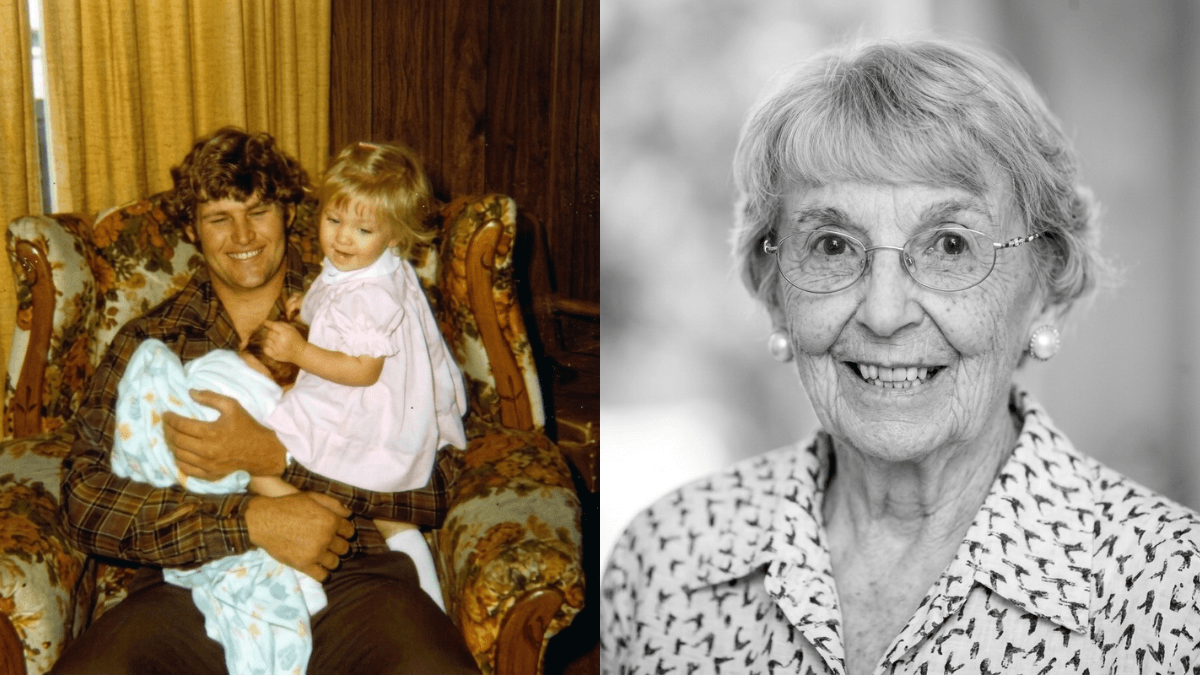
In the late 1940s, Gladys married Leslie Les Samuel Jesperson, and that is where her part in the family story begins. When I first started digging into this topic, I expected to find a lot more about her. Instead, I found a woman who stays in the background, almost like someone standing just offstage. Her voice is missing from nearly every page I read.
She was born circa 1929 or 1930 as Gladys Bellamy, and over time she became Gladys Lorraine Jesperson. Her husband went by Les, and his middle name was Samuel. Her family role was simple on paper: she was a wife and a mother. Her son, Keith Hunter Jesperson, is the reason most people know her at all, and that is a sad way to be remembered.
The world knows Keith as the Happy Face Killer, and that name took over every headlines page about the Hunter family line. Her own story sits in vital notices and public records, which only give dry facts. She died on April 29, 1985, and the quiet presence she had in life stayed with her afterward. Her Jesperson surname now sits inside something complicated, and her side of it is still unheard.
Gladys Jesperson’s Family Life and Roles
When I look at an old family portrait, my eyes go to the people near the camera first, and I have to remind myself to check the background, where the soft focus hides someone like Gladys. She was the wife of Les Jesperson, and their union shaped a household that moved between communities in Washington and British Columbia. She belonged to a generation where women’s lives were told through family roles, not public careers,
so you will not find eloquent diaries or formal interviews from her. What we have are the recollections of her children and grandchildren, plus genealogical records and biographical summaries. Those summaries list multiple children: five in total, made up of two boys and two girls, with Keith as the middle child. The numbers look simple, yet I have always felt the complexity behind them. Her role as a mother inside that home mattered a lot, and the ripple effect of later events after her death still touches the Jesperson family today.
| Detail | Information |
|---|---|
| Full name | Gladys Lorraine Jesperson |
| Birth name | Gladys Bellamy |
| Born | Around 1929 to 1930 |
| Died | April 29, 1985 |
| Spouse | Leslie “Les” Samuel Jesperson (married in the late 1940s) |
| Children | Five, with Keith as the middle child |
| Best-known child | Keith Hunter Jesperson, known as the Happy Face Killer |
| Grandchildren | Includes Melissa G. Moore, a writer and producer |
| Places lived | British Columbia (Chilliwack) and Washington (Selah, Yakima) |
| Known for | Being the wife of Les and the mother of Keith |
| Occupation | No verified public record |
| Public life | No interviews, speeches, or civic roles on record |
A Household in British Columbia and Washington
When I read about Keith and his childhood, the first thing that stands out is the scent of cedar and the rain that seem to hang over every page. His household moved through British Columbia and Washington, starting in Chilliwack and later settling in Selah and Yakima. Those towns show up again and again in accounts of the years he grew up,
and they paint a clear picture of mid century life in the Pacific Northwest. The movements of the family followed jobs and opportunities, which was common then, and the rhythms of that time gave the home a kind of private normalcy. Most of what we know about the atmosphere inside the Jesperson home comes from Keith’s recollections and from narratives written by others,
so the family story is told secondhand. Gladys herself is never quoted, and none of her own words survive in those places. She stays at the edges of the frame as a mother whose name is spoken by other people. Les was there too, but even his side of the household reaches us through someone else’s voice.
The Shadow of Notoriety
When a child turns famous or infamous, the parent’s life gets recast in a way nobody planned. I keep coming back to the two truths here. Keith Hunter Jesperson is a central figure in modern true crime history, and that reality carries real weight. At the same time, Gladys was a private person who existed, married, and raised children,
and her name now lives mostly as a component of his biography. She died in 1985, years before the series of murders came to light, so she never saw the story that pulled her into its orbit. That gravitational pull is strange to think about, because association with her son turned the mother’s identity into a footnote of his crimes.
We know he went on to confess and end up in prison, yet the public record says almost nothing about her hopes. Her relationship with the family and others is still unclear, so her life reads like a silhouette, and she passed away long before the murders were linked to her son’s crimes. As a mother, she deserves to be seen as more than a side note.
Grandchildren and Modern Echoes
The family tree of Gladys keeps growing into the present through her grandchildren. Her eldest daughter’s line leads to Melissa, better known as Melissa G. Moore, a writer and producer who became a public figure by talking about growing up with Keith. Her work acts as a bridge between private family history and the public conversation, and it gives the world a window into the household where her early years unfolded.
I think that is a brave thing to do, though her perspective is only her own and she does not speak for Gladys. Her story is an extension of Keith’s story, and it shows how the legacy has shadowed the family for decades. Keith also has other children, often named as Jason and Carrie, and they are not widely known as public figures.
They have kept quiet boundaries and stayed out of the spotlight, so I would rather respect that than say more about people who never asked for attention. Still, they form the next layer in the family arc, and their lived experience carries memories and futures of their own. Their existence is a reminder that surnames in genealogical lines belong to real people, and that one single notorious story does not define all of them.
What We Do Not Know
Some of the most revealing paragraph choices are about what stays absent, and that is how I see the story of Gladys. I could not find a verified public record of her occupation. There are no interviews, no speeches, and no civic roles listed in local histories. There is also nothing on net worth or business holdings. I do not read these gaps as failures of the archive. They are reflections of a life that went by quietly.
Beyond a few essential dates and roles, the specifics start to blur. We do not know where she met Les, how they celebrated birthdays, what the kitchen was like, or which songs she liked. The sounds of home and the little rituals that families keep are missing too. The truth is that many lives of women in the mid twentieth century were built from everyday acts, not public documentation. I try to honor that, so I will not fill the silence with speculation.
Conclusion
When I write about figures like Gladys, I picture a quilt hung in a dim room. Some patches are vivid, made from events that newspapers recorded or authors analyzed. Other patches are soft and worn, known only to the people who touched each piece daily.
Gladys’s quilt is mostly made of those softer pieces. Her name is not the headline. It is the stitching beneath. The gravity of her son’s notoriety has pulled her into view, yet the outline stays spare. She was a wife, a mother, and a member of a family that moved across provinces and states, living quietly in places the map can still find.
Frequently Asked Questions
Who was Gladys Jesperson?
Gladys Lorraine Jesperson, born Gladys Bellamy, was the wife of Les Jesperson and the mother of Keith Hunter Jesperson. She is mostly remembered through her son’s story.
When was Gladys Jesperson born and when did she die?
She was born around 1929 to 1930. She died on April 29, 1985.
Who was her husband?
She married Leslie “Les” Samuel Jesperson in the late 1940s.
How many children did Gladys have?
Sources describe five children, two boys and two girls named in the summary, with Keith as the middle child.
Where did the family live?
The family moved between British Columbia and Washington. Towns named in accounts of Keith’s childhood include Chilliwack, Selah, and Yakima.
Why do people search for her name?
Her son, Keith Hunter Jesperson, became known as the Happy Face Killer. Her name now appears mostly in his biography, even though she died in 1985, before his crimes became known.
Who is Melissa G. Moore?
She is Keith’s eldest daughter and Gladys’s granddaughter. She is a writer and producer who has spoken publicly about growing up in the family.
What is known about Gladys’s job or public life?
Nothing verified. There are no public records of her occupation, no interviews, no speeches, and no civic roles in local histories.
Do we know her own thoughts or words?
No. She is not quoted anywhere. What we know about her comes from public records, genealogical records, and the recollections of others.
Why is so little known about her?
Many women of her generation were described through family roles rather than public careers. Her life was lived quietly, and the records show only the main dates and roles.

1 Comment
Pingback: Letania Kirkland Dancer, Yoga Teacher, Writer, and Founder of Process Studio - Futurefanzine