

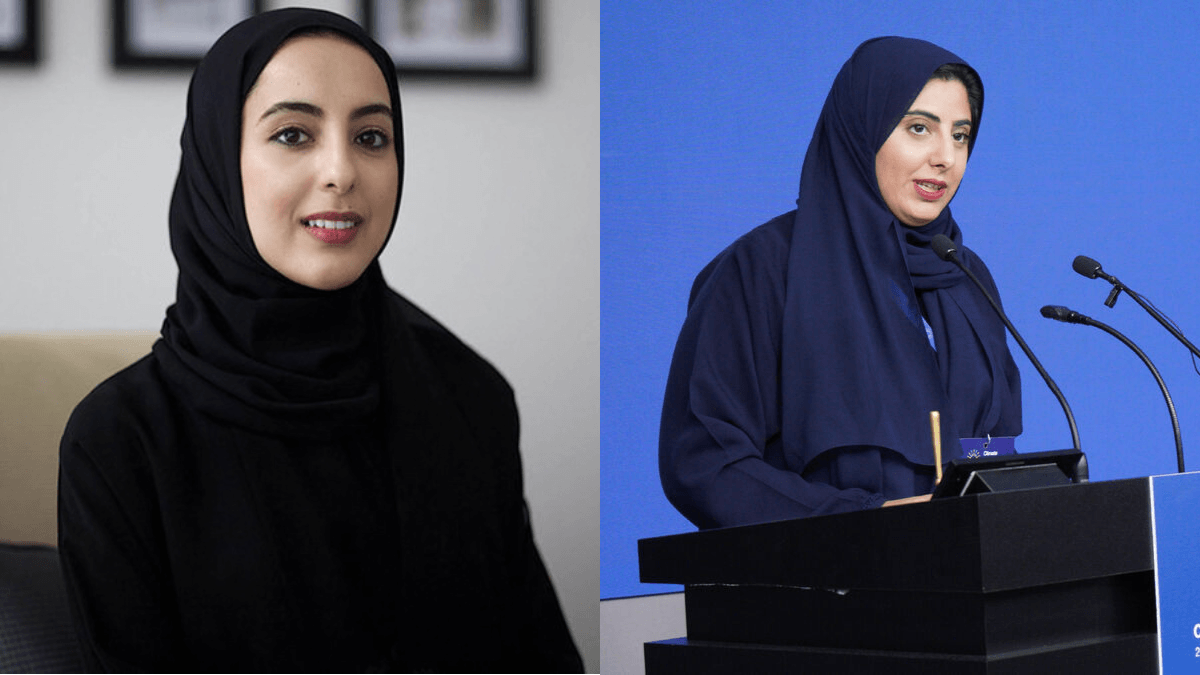
When trying to find Shamsa Bint Suhail Al Mazrouei, also known as Sheikha Shamsa Bint Suhail Al Mazrouei, I observed that her tale has a special area at the intersection of power and privacy. Through marriage, she has turned out to be linked to essential ruling families inside the Gulf, giving her family ties that are consequential in understanding her ancient beyond. Yet her public document stays concise, with her call, verifiable dates, and numbers offering most effectively a restrained view of her existence.
She seems as a parent associated with discretion, whether or not that changed into selected or inherited, creating a defensive cloak around personal information. In getting to know humans whose lives sit down near public establishments, I have observed that silence, gaps, and absence can now and again tell us as a great deal as available records,
however they need to no longer be dealt with as proof of anything beyond what’s documented. Here, the intentional margin, deliberate white space, and quiet manuscript of her tale stand apart from a busy manuscript of public facts, while family, ties, public, document, dates, and numbers maintain to outline what can responsibly be stated approximately her privateness, marriage, ruling families, Gulf, and power.
Shamsa Bint Suhail Al Mazrouei: Family, Marriage & Lineage
The story of Shamsa becomes clearer at the same time as looking at the Al Nahyan circle of relatives as every family and a kingdom organisation. Her marriage to Khalifa bin Zayed Al Nahyan related her to the ruling family of Abu Dhabi. This link delivered her right into a circle of human beings worried within the governance of the United Arab Emirates (UAE). In this setting, personal and political lines can naturally overlap, making the private household part of a larger public structure. The couple reportedly had eight children, including two sons and six daughters,
figures that help explain the size of the family and its many branches. From my experience researching royal and prominent families, these basic counts, names, and relationships are often the clearest starting points for understanding lineage. The available family report additionally places some acknowledged son births inside the mid-Nineteen Sixties. Sultan bin Khalifa is said to have been born in 1965, while the wedding is typically related to the Sixties,
with 18 October 1964 serving as an approximate anchor. These generations, milestones, marriages, births, and titles may be considered as factors on a map of own family records, where every event will become a coordinate and each baby a node connecting the family to public responsibility. The family figures, heirs, sons, daughters, country, organization, ruling house, Abu Dhabi, governance, household, duty, names, many years, and internet of relationships consequently offer context for knowledge of how Shamsa fits in the broader family structure.
| Bio Detail | Information |
|---|---|
| Full Name | Shamsa Bint Suhail Al Mazrouei |
| Known As | Sheikha Shamsa Bint Suhail Al Mazrouei |
| Spouse | Khalifa bin Zayed Al Nahyan |
| Family | Al Nahyan ruling family |
| Location | Abu Dhabi, United Arab Emirates |
| Children | 8 children, reportedly 2 sons and 6 daughters |
| Known Son | Sultan bin Khalifa |
| Public Profile | Limited and private |
| Birth Date | Not widely documented |
| Education | Not widely documented |
| Career | Limited public information |
| Public Role | Primarily known through her family and marriage |
| Notable Date | 13 May 2022, death of Khalifa bin Zayed Al Nahyan |
Public Role, Visibility, and the Art of Absence
Shamsa has a biography that stands apart from the usual stories of speeches, charitable foundations and board memberships often seen with modern royal or political spouses. Her presence in life is marked by quiet restraint. There are philanthropic causes tied to her name, no high-profile projects and almost no trace on social media. In English-language records information about her is sparse.. This lack of detail should not be seen as emptiness. Instead it may reflect a choice to keep privacy intact—like a garden kept hidden behind tall walls.
Her public identity is shaped mostly by her roles within the family: as a wife, a mother and a member of the Al Nahyan dynasty. From what’s actually documented the clearest picture of her comes not from speculation but from what is confirmed. She isn’t known so many basic details about her, like her birthday, her schooling or any work she has done outside of being part of a family aren’t easy to find. In a place where family background matters a lot and staying quiet can have an effect, choosing to stay unknown can be a way of showing who she is.
The true meaning behind that silence? That stays private. Without evidence we cannot know what it means to Shamsa herself. Her life can therefore be viewed like a quiet instrument within a larger orchestra, not without sound, but heard mainly through the sustain beneath the melody. This makes royal, political, family, dynasty, biography, identity, visibility, records, privacy, achievements, and sources important terms when examining what is known about Shamsa without turning missing information into fact.
Household, Descendants, and the Next Generation
The family of Shamsa Bint Suhail Al Mazrouei has eight children. This family connects one generation to another. Goes beyond the immediate family. The eight children are two sons named Sultan and Mohammed. The other six are daughters. Each member of the family is connected to public areas, public responsibilities or private lives. The sons may be connected with leadership keeping things going and traditional male heirs. The daughters may have roles that are not seen much around the world but are still important, for the family line and the larger family.
In looking at a large household, it is useful to recognize its multiple households, marriages, and alliances, including dynastic links and forms of patronage. The internal dynamics can be complex, yet publicly the family can be viewed as a lattice of relationships that helps narrate the family’s story through name, title, births, and ceremonial moments. In this way six daughters, two sons, 8 children, governance, heirs, dynastic, marriage, relationships, continuity, ceremonial roles, duties and alliances all form part of a family story that continues through increments and the next generation.
Public Records, Media Mentions, and Notable Gaps
The available public record for Shamsa is more focused on family events than on a detailed personal biography. A public ledger contains marriage dates, although some are approximate, while children’s names have been cataloged in publicly available information. The death of Khalifa on 13 May 2022 is a documented event. Many personal details are missing. When I research households I often see that privacy decides what passes to the press, especially in places where a formal press release may announce big family events but does not explain every private detail.
Some facts may therefore stay in family memory of becoming established public fact. For Shamsa her birth date is not widely known. Information about her education, career and independent philanthropic leadership is limited. There are also verified public social‑media accounts that belong to her which makes some parts of her public profile hard to document. The situation can be pictured as a desert with well‑marked oases: family relations and headline dates are more watered
while the personal biography stays dry and discreet. This does not mean that marriage, children, names, family, royal, household, education, career, philanthropy, leadership, social media, accounts, biography, privacy, fact, memory, dates, death, Khalifa, 13 May 2022 Shamsa, personal details, regions, press, release, oases, desert or plain are all documented the way. Instead these words highlight the difference between what’s publicly recorded and what stays outside the accessible record.
Conclusion
The story of Shamsa Bint Suhail Al Mazrouei, frequently mentioned as Shamsa, Bint, Suhail, or Al Mazrouei, indicates how a public narrative can continue to be intently related to privacy even around power. Her name represents a node inside a ruling dynasty, with eight youngsters, one marriage, and family connections spanning decades and linking to the UAE, or United Arab Emirates, and its present day records. The to be had facts, dates, and numbers provide a foundation for expertise her existence, even as a few information continue to be inference due to the fact she largely lived out of doors the highlight.
Her vicinity in her own family check in connects her to a wider circle of relatives, country, ruling dynasty, and records, even as the restricted public narrative leaves elements of her marriage, youngsters, connections, and private existence quiet. In my view, the documented statistics, dates, and numbers are the most secure manner to technique her tale without turning uncertainty into actuality, leaving the closing privacy as quiet as a wasteland night time around a town of light. The key factors stay strength, veil, privacy, lifestyles, circle of relatives, country, metropolis, 8, one, and a long time.
FAQS
Who is Shamsa Bint Suhail Al Mazrouei?
Shamsa Bint Suhail Al Mazrouei is called a member of the Al Nahyan ruling family via her marriage to Khalifa bin Zayed Al Nahyan.
Who became Shamsa Bint Suhail Al Mazrouei married to?
She married Khalifa bin Zayed Al Nahyan, the former President of the United Arab Emirates.
How many youngsters did Shamsa Bint Suhail Al Mazrouei have?
She and Khalifa bin Zayed Al Nahyan are said to have had eight children, along with sons and 6 daughters.
When did Shamsa Bint Suhail Al Mazrouei marry Khalifa bin Zayed?
Their marriage is normally related to 18 October 1964, even though a few public assets describe the date as approximate.
Is Shamsa Bint Suhail Al Mazrouei a public figure?
She has a confined public profile, and relatively little private data approximately her is to be had in significantly reachable property.
What is your opinion about Shamsa Bint Suhail Al Mazrouei’s education and profession?
Details about her training, career, and unbiased expert sports activities aren’t appreciably documented in reliable public statistics.
When did Khalifa bin Zayed Al Nahyan die?
Khalifa bin Zayed Al Nahyan died on May 13, 2022.

1 Comment
Pingback: Ena Frias A Look at Her Career, Family, and Public Presence - Futurefanzine